The Complete Works
William Shakespeare
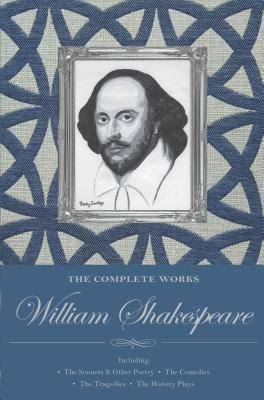
Description
All the plays and poems of William Shakespeare.
| Length | Emails required |
|---|---|
| 7,725 lines | 194 (based on one per day) |
Preview - part 76 of 194
SCENE V. Another part of the field
Alarum. Enter KING HENRY alone
KING HENRY. This battle fares like to the morning's war, When dying clouds contend with growing light, What time the shepherd, blowing of his nails, Can neither call it perfect day nor night. Now sways it this way, like a mighty sea Forc'd by the tide to combat with the wind; Now sways it that way, like the selfsame sea Forc'd to retire by fury of the wind. Sometime the flood prevails, and then the wind; Now one the better, then another best; Both tugging to be victors, breast to breast, Yet neither conqueror nor conquered. So is the equal poise of this fell war. Here on this molehill will I sit me down. To whom God will, there be the victory! For Margaret my queen, and Clifford too, Have chid me from the battle, swearing both They prosper best of all when I am thence. Would I were dead, if God's good will were so! For what is in this world but grief and woe? O God! methinks it were a happy life To be no better than a homely swain; To sit upon a hill, as I do now, To carve out dials quaintly, point by point, Thereby to see the minutes how they run- How many makes the hour full complete, How many hours brings about the day, How many days will finish up the year, How many years a mortal man may live. When this is known, then to divide the times- So many hours must I tend my flock; So many hours must I take my rest; So many hours must I contemplate; So many hours must I sport myself; So many days my ewes have been with young; So many weeks ere the poor fools will can; So many years ere I shall shear the fleece: So minutes, hours, days, months, and years, Pass'd over to the end they were created, Would bring white hairs unto a quiet grave. Ah, what a life were this! how sweet! how lovely! Gives not the hawthorn bush a sweeter shade To shepherds looking on their silly sheep, Than doth a rich embroider'd canopy To kings that fear their subjects' treachery? O yes, it doth; a thousand-fold it doth. And to conclude: the shepherd's homely curds, His cold thin drink out of his leather bottle, His wonted sleep under a fresh tree's shade, All which secure and sweetly he enjoys, Is far beyond a prince's delicates- His viands sparkling in a golden cup, His body couched in a curious bed, When care, mistrust, and treason waits on him.
Alarum. Enter a son that hath kill'd his Father, at one door; and a FATHER that hath kill'd his Son, at another door
SON. Ill blows the wind that profits nobody. This man whom hand to hand I slew in fight May be possessed with some store of crowns; And I, that haply take them from him now, May yet ere night yield both my life and them To some man else, as this dead man doth me. Who's this? O God! It is my father's face, Whom in this conflict I unwares have kill'd. O heavy times, begetting such events! From London by the King was I press'd forth; My father, being the Earl of Warwick's man, Came on the part of York, press'd by his master; And I, who at his hands receiv'd my life, Have by my hands of life bereaved him. Pardon me, God, I knew not what I did. And pardon, father, for I knew not thee. My tears shall wipe away these bloody marks; And no more words till they have flow'd their fill. KING HENRY. O piteous spectacle! O bloody times! Whiles lions war and battle for their dens, Poor harmless lambs abide their enmity. Weep, wretched man; I'll aid thee tear for tear; And let our hearts and eyes, like civil war, Be blind with tears and break o'ercharg'd with grief.
Enter FATHER, bearing of his SON
FATHER. Thou that so stoutly hath resisted me, Give me thy gold, if thou hast any gold; For I have bought it with an hundred blows. But let me see. Is this our foeman's face? Ah, no, no, no, no, it is mine only son! Ah, boy, if any life be left in thee, Throw up thine eye! See, see what show'rs arise, Blown with the windy tempest of my heart Upon thy wounds, that kills mine eye and heart! O, pity, God, this miserable age! What stratagems, how fell, how butcherly, Erroneous, mutinous, and unnatural, This deadly quarrel daily doth beget! O boy, thy father gave thee life too soon, And hath bereft thee of thy life too late! KING HENRY. Woe above woe! grief more than common grief! O that my death would stay these ruthful deeds! O pity, pity, gentle heaven, pity! The red rose and the white are on his face, The fatal colours of our striving houses: The one his purple blood right well resembles; The other his pale cheeks, methinks, presenteth. Wither one rose, and let the other flourish! If you contend, a thousand lives must perish. SON. How will my mother for a father's death Take on with me, and ne'er be satisfied! FATHER. How will my wife for slaughter of my son Shed seas of tears, and ne'er be satisfied! KING HENRY. How will the country for these woeful chances Misthink the King, and not be satisfied! SON. Was ever son so rued a father's death? FATHER. Was ever father so bemoan'd his son? KING HENRY. Was ever king so griev'd for subjects' woe? Much is your sorrow; mine ten times so much. SON. I'll bear thee hence, where I may weep my fill. Exit with the body FATHER. These arms of mine shall be thy winding-sheet; My heart, sweet boy, shall be thy sepulchre, For from my heart thine image ne'er shall go; My sighing breast shall be thy funeral bell; And so obsequious will thy father be, Even for the loss of thee, having no more, As Priam was for all his valiant sons. I'll bear thee hence; and let them fight that will, For I have murdered where I should not kill. Exit with the body KING HENRY. Sad-hearted men, much overgone with care, Here sits a king more woeful than you are.
Alarums, excursions. Enter QUEEN MARGARET, PRINCE OF WALES, and EXETER
PRINCE OF WALES. Fly, father, fly; for all your friends are fled, And Warwick rages like a chafed bull. Away! for death doth hold us in pursuit. QUEEN MARGARET. Mount you, my lord; towards Berwick post amain. Edward and Richard, like a brace of greyhounds Having the fearful flying hare in sight, With fiery eyes sparkling for very wrath, And bloody steel grasp'd in their ireful hands, Are at our backs; and therefore hence amain. EXETER. Away! for vengeance comes along with them. Nay, stay not to expostulate; make speed; Or else come after. I'll away before. KING HENRY. Nay, take me with thee, good sweet Exeter. Not that I fear to stay, but love to go Whither the Queen intends. Forward; away! Exeunt
SCENE VI. Another part of the field
A loud alarum. Enter CLIFFORD, wounded
CLIFFORD. Here burns my candle out; ay, here it dies, Which, whiles it lasted, gave King Henry light. O Lancaster, I fear thy overthrow More than my body's parting with my soul! My love and fear glu'd many friends to thee; And, now I fall, thy tough commixture melts, Impairing Henry, strength'ning misproud York. The common people swarm like summer flies; And whither fly the gnats but to the sun? And who shines now but Henry's enemies? O Phoebus, hadst thou never given consent That Phaethon should check thy fiery steeds, Thy burning car never had scorch'd the earth! And, Henry, hadst thou sway'd as kings should do, Or as thy father and his father did, Giving no ground unto the house of York, They never then had sprung like summer flies; I and ten thousand in this luckless realm Had left no mourning widows for our death; And thou this day hadst kept thy chair in peace. For what doth cherish weeds but gentle air? And what makes robbers bold but too much lenity? Bootless are plaints, and cureless are my wounds. No way to fly, nor strength to hold out flight. The foe is merciless and will not pity; For at their hands I have deserv'd no pity. The air hath got into my deadly wounds, And much effuse of blood doth make me faint. Come, York and Richard, Warwick and the rest; I stabb'd your fathers' bosoms: split my breast. [He faints]
Alarum and retreat. Enter EDWARD, GEORGE, RICHARD MONTAGUE, WARWICK, and soldiers
EDWARD. Now breathe we, lords. Good fortune bids us pause And smooth the frowns of war with peaceful looks. Some troops pursue the bloody-minded Queen That led calm Henry, though he were a king, As doth a sail, fill'd with a fretting gust, Command an argosy to stern the waves. But think you, lords, that Clifford fled with them? WARWICK. No, 'tis impossible he should escape; For, though before his face I speak the words, Your brother Richard mark'd him for the grave; And, whereso'er he is, he's surely dead. [CLIFFORD groans, and dies] RICHARD. Whose soul is that which takes her heavy leave? A deadly groan, like life and death's departing. See who it is. EDWARD. And now the battle's ended, If friend or foe, let him be gently used. RICHARD. Revoke that doom of mercy, for 'tis Clifford; Who not contented that he lopp'd the branch In hewing Rutland when his leaves put forth, But set his murd'ring knife unto the root From whence that tender spray did sweetly spring- I mean our princely father, Duke of York. WARWICK. From off the gates of York fetch down the head, Your father's head, which Clifford placed there; Instead whereof let this supply the room. Measure for measure must be answered. EDWARD. Bring forth that fatal screech-owl to our house, That nothing sung but death to us and ours. Now death shall stop his dismal threat'ning sound, And his ill-boding tongue no more shall speak. WARWICK. I think his understanding is bereft. Speak, Clifford, dost thou know who speaks to thee? Dark cloudy death o'ershades his beams of life, And he nor sees nor hears us what we say. RICHARD. O, would he did! and so, perhaps, he doth. 'Tis but his policy to counterfeit, Because he would avoid such bitter taunts Which in the time of death he gave our father. GEORGE. If so thou think'st, vex him with eager words. RICHARD. Clifford, ask mercy and obtain no grace. EDWARD. Clifford, repent in bootless penitence. WARWICK. Clifford, devise excuses for thy faults. GEORGE. While we devise fell tortures for thy faults. RICHARD. Thou didst love York, and I am son to York. EDWARD. Thou pitied'st Rutland, I will pity thee. GEORGE. Where's Captain Margaret, to fence you now? WARWICK. They mock thee, Clifford; swear as thou wast wont. RICHARD. What, not an oath? Nay, then the world goes hard When Clifford cannot spare his friends an oath. I know by that he's dead; and by my soul, If this right hand would buy two hours' life, That I in all despite might rail at him, This hand should chop it off, and with the issuing blood Stifle the villain whose unstanched thirst York and young Rutland could not satisfy. WARWICK. Ay, but he's dead. Off with the traitor's head, And rear it in the place your father's stands. And now to London with triumphant march, There to be crowned England's royal King; From whence shall Warwick cut the sea to France, And ask the Lady Bona for thy queen. So shalt thou sinew both these lands together; And, having France thy friend, thou shalt not dread The scatt'red foe that hopes to rise again; For though they cannot greatly sting to hurt, Yet look to have them buzz to offend thine ears. First will I see the coronation; And then to Brittany I'll cross the sea To effect this marriage, so it please my lord. EDWARD. Even as thou wilt, sweet Warwick, let it be; For in thy shoulder do I build my seat, And never will I undertake the thing Wherein thy counsel and consent is wanting. Richard, I will create thee Duke of Gloucester; And George, of Clarence; Warwick, as ourself, Shall do and undo as him pleaseth best. RICHARD. Let me be Duke of Clarence, George of Gloucester; For Gloucester's dukedom is too ominous. WARWICK. Tut, that's a foolish observation. Richard, be Duke of Gloucester. Now to London To see these honours in possession. Exeunt
<>
ACT III. SCENE I. A chase in the north of England
Enter two KEEPERS, with cross-bows in their hands
FIRST KEEPER. Under this thick-grown brake we'll shroud ourselves, For through this laund anon the deer will come; And in this covert will we make our stand, Culling the principal of all the deer. SECOND KEEPER. I'll stay above the hill, so both may shoot. FIRST KEEPER. That cannot be; the noise of thy cross-bow Will scare the herd, and so my shoot is lost. Here stand we both, and aim we at the best; And, for the time shall not seem tedious, I'll tell thee what befell me on a day In this self-place where now we mean to stand. SECOND KEEPER. Here comes a man; let's stay till he be past.
Enter KING HENRY, disguised, with a prayer-book
KING HENRY. From Scotland am I stol'n, even of pure love, To greet mine own land with my wishful sight. No, Harry, Harry, 'tis no land of thine; Thy place is fill'd, thy sceptre wrung from thee, Thy balm wash'd off wherewith thou wast anointed. No bending knee will call thee Caesar now, No humble suitors press to speak for right, No, not a man comes for redress of thee; For how can I help them and not myself? FIRST KEEPER. Ay, here's a deer whose skin's a keeper's fee. This is the quondam King; let's seize upon him. KING HENRY. Let me embrace thee, sour adversity, For wise men say it is the wisest course. SECOND KEEPER. Why linger we? let us lay hands upon him. FIRST KEEPER. Forbear awhile; we'll hear a little more. KING HENRY. My Queen and son are gone to France for aid; And, as I hear, the great commanding Warwick Is thither gone to crave the French King's sister To wife for Edward. If this news be true, Poor queen and son, your labour is but lost; For Warwick is a subtle orator, And Lewis a prince soon won with moving words. By this account, then, Margaret may win him; For she's a woman to be pitied much. Her sighs will make a batt'ry in his breast; Her tears will pierce into a marble heart; The tiger will be mild whiles she doth mourn; And Nero will be tainted with remorse To hear and see her plaints, her brinish tears. Ay, but she's come to beg: Warwick, to give. She, on his left side, craving aid for Henry: He, on his right, asking a wife for Edward. She weeps, and says her Henry is depos'd: He smiles, and says his Edward is install'd; That she, poor wretch, for grief can speak no more; Whiles Warwick tells his title, smooths the wrong, Inferreth arguments of mighty strength, And in conclusion wins the King from her With promise of his sister, and what else, To strengthen and support King Edward's place. O Margaret, thus 'twill be; and thou, poor soul, Art then forsaken, as thou went'st forlorn! SECOND KEEPER. Say, what art thou that talk'st of kings and queens? KING HENRY. More than I seem, and less than I was born to: A man at least, for less I should not be; And men may talk of kings, and why not I? SECOND KEEPER. Ay, but thou talk'st as if thou wert a king. KING HENRY. Why, so I am- in mind; and that's enough. SECOND KEEPER. But, if thou be a king, where is thy crown? KING HENRY. My crown is in my heart, not on my head; Not deck'd with diamonds and Indian stones, Not to be seen. My crown is call'd content; A crown it is that seldom kings enjoy. SECOND KEEPER. Well, if you be a king crown'd with content, Your crown content and you must be contented To go along with us; for as we think, You are the king King Edward hath depos'd; And we his subjects, sworn in all allegiance, Will apprehend you as his enemy. KING HENRY. But did you never swear, and break an oath? SECOND KEEPER. No, never such an oath; nor will not now. KING HENRY. Where did you dwell when I was King of England? SECOND KEEPER. Here in this country, where we now remain. KING HENRY. I was anointed king at nine months old; My father and my grandfather were kings; And you were sworn true subjects unto me; And tell me, then, have you not broke your oaths? FIRST KEEPER. No; For we were subjects but while you were king. KING HENRY. Why, am I dead? Do I not breathe a man? Ah, simple men, you know not what you swear! Look, as I blow this feather from my face, And as the air blows it to me again, Obeying with my wind when I do blow, And yielding to another when it blows, Commanded always by the greater gust, Such is the lightness of you common men. But do not break your oaths; for of that sin My mild entreaty shall not make you guilty. Go where you will, the King shall be commanded; And be you kings: command, and I'll obey. FIRST KEEPER. We are true subjects to the King, King Edward. KING HENRY. So would you be again to Henry, If he were seated as King Edward is. FIRST KEEPER. We charge you, in God's name and the King's, To go with us unto the officers. KING HENRY. In God's name, lead; your King's name be obey'd; And what God will, that let your King perform; And what he will, I humbly yield unto. Exeunt
<>
SCENE II. London. The palace
Enter KING EDWARD, GLOUCESTER, CLARENCE, and LADY GREY
KING EDWARD. Brother of Gloucester, at Saint Albans' field This lady's husband, Sir Richard Grey, was slain, His land then seiz'd on by the conqueror. Her suit is now to repossess those lands; Which we in justice cannot well deny, Because in quarrel of the house of York The worthy gentleman did lose his life. GLOUCESTER. Your Highness shall do well to grant her suit; It were dishonour to deny it her. KING EDWARD. It were no less; but yet I'll make a pause. GLOUCESTER. [Aside to CLARENCE] Yea, is it so? I see the lady hath a thing to grant, Before the King will grant her humble suit. CLARENCE. [Aside to GLOUCESTER] He knows the game; how true he keeps the wind! GLOUCESTER. [Aside to CLARENCE] Silence! KING EDWARD. Widow, we will consider of your suit; And come some other time to know our mind. LADY GREY. Right gracious lord, I cannot brook delay. May it please your Highness to resolve me now; And what your pleasure is shall satisfy me. GLOUCESTER. [Aside] Ay, widow? Then I'll warrant you all your lands, An if what pleases him shall pleasure you. Fight closer or, good faith, you'll catch a blow. CLARENCE. [Aside to GLOUCESTER] I fear her not, unless she chance to fall. GLOUCESTER. [Aside to CLARENCE] God forbid that, for he'll take vantages. KING EDWARD. How many children hast thou, widow, tell me. CLARENCE. [Aside to GLOUCESTER] I think he means to beg a child of her. GLOUCESTER. [Aside to CLARENCE] Nay, then whip me; he'll rather give her two. LADY GREY. Three, my most gracious lord. GLOUCESTER. [Aside] You shall have four if you'll be rul'd by him. KING EDWARD. 'Twere pity they should lose their father's lands. LADY GREY. Be pitiful, dread lord, and grant it, then. KING EDWARD. Lords, give us leave; I'll try this widow's wit. GLOUCESTER. [Aside] Ay, good leave have you; for you will have leave Till youth take leave and leave you to the crutch. [GLOUCESTER and CLARENCE withdraw] KING EDWARD. Now tell me, madam, do you love your children? LADY GREY. Ay, full as dearly as I love myself. KING EDWARD. And would you not do much to do them good? LADY GREY. To do them good I would sustain some harm. KING EDWARD. Then get your husband's lands, to do them good. LADY GREY. Therefore I came unto your Majesty. KING EDWARD. I'll tell you how these lands are to be got. LADY GREY. So shall you bind me to your Highness' service. KING EDWARD. What service wilt thou do me if I give them? LADY GREY. What you command that rests in me to do. KING EDWARD. But you will take exceptions to my boon. LADY GREY. No, gracious lord, except I cannot do it. KING EDWARD. Ay, but thou canst do what I mean to ask. LADY GREY. Why, then I will do what your Grace commands. GLOUCESTER. He plies her hard; and much rain wears the marble. CLARENCE. As red as fire! Nay, then her wax must melt. LADY GREY. Why stops my lord? Shall I not hear my task? KING EDWARD. An easy task; 'tis but to love a king. LADY GREY. That's soon perform'd, because I am a subject. KING EDWARD. Why, then, thy husband's lands I freely give thee. LADY GREY. I take my leave with many thousand thanks. GLOUCESTER. The match is made; she seals it with a curtsy. KING EDWARD. But stay thee- 'tis the fruits of love I mean. LADY GREY. The fruits of love I mean, my loving liege. KING EDWARD. Ay, but, I fear me, in another sense. What love, thinkst thou, I sue so much to get? LADY GREY. My love till death, my humble thanks, my prayers; That love which virtue begs and virtue grants. KING EDWARD. No, by my troth, I did not mean such love. LADY GREY. Why, then you mean not as I thought you did. KING EDWARD. But now you partly may perceive my mind. LADY GREY. My mind will never grant what I perceive Your Highness aims at, if I aim aright. KING EDWARD. To tell thee plain, I aim to lie with thee. LADY GREY. To tell you plain, I had rather lie in prison. KING EDWARD. Why, then thou shalt not have thy husband's lands. LADY GREY. Why, then mine honesty shall be my dower; For by that loss I will not purchase them. KING EDWARD. Therein thou wrong'st thy children mightily. LADY GREY. Herein your Highness wrongs both them and me. But, mighty lord, this merry inclination Accords not with the sadness of my suit. Please you dismiss me, either with ay or no. KING EDWARD. Ay, if thou wilt say ay to my request; No, if thou dost say no to my demand. LADY GREY. Then, no, my lord. My suit is at an end. GLOUCESTER. The widow likes him not; she knits her brows. CLARENCE. He is the bluntest wooer in Christendom. KING EDWARD. [Aside] Her looks doth argue her replete with modesty; Her words doth show her wit incomparable; All her perfections challenge sovereignty. One way or other, she is for a king; And she shall be my love, or else my queen. Say that King Edward take thee for his queen? LADY GREY. 'Tis better said than done, my gracious lord. I am a subject fit to jest withal, But far unfit to be a sovereign. KING EDWARD. Sweet widow, by my state I swear to thee I speak no more than what my soul intends; And that is to enjoy thee for my love. LADY GREY. And that is more than I will yield unto. I know I am too mean to be your queen, And yet too good to be your concubine. KING EDWARD. You cavil, widow; I did mean my queen. LADY GREY. 'Twill grieve your Grace my sons should call you father. KING EDWARD.No more than when my daughters call thee mother. Thou art a widow, and thou hast some children; And, by God's Mother, I, being but a bachelor, Have other some. Why, 'tis a happy thing To be the father unto many sons. Answer no more, for thou shalt be my queen. GLOUCESTER. The ghostly father now hath done his shrift. CLARENCE. When he was made a shriver, 'twas for shrift. KING EDWARD. Brothers, you muse what chat we two have had. GLOUCESTER. The widow likes it not, for she looks very sad. KING EDWARD. You'd think it strange if I should marry her. CLARENCE. To who, my lord? KING EDWARD. Why, Clarence, to myself. GLOUCESTER. That would be ten days' wonder at the least. CLARENCE. That's a day longer than a wonder lasts. GLOUCESTER. By so much is the wonder in extremes. KING EDWARD. Well, jest on, brothers; I can tell you both Her suit is granted for her husband's lands.
Enter a NOBLEMAN
NOBLEMAN. My gracious lord, Henry your foe is taken And brought your prisoner to your palace gate. KING EDWARD. See that he be convey'd unto the Tower. And go we, brothers, to the man that took him To question of his apprehension. Widow, go you along. Lords, use her honourably. Exeunt all but GLOUCESTER GLOUCESTER. Ay, Edward will use women honourably. Would he were wasted, marrow, bones, and all, That from his loins no hopeful branch may spring To cross me from the golden time I look for! And yet, between my soul's desire and me- The lustful Edward's title buried- Is Clarence, Henry, and his son young Edward, And all the unlook'd for issue of their bodies, To take their rooms ere I can place myself. A cold premeditation for my purpose! Why, then I do but dream on sovereignty; Like one that stands upon a promontory And spies a far-off shore where he would tread, Wishing his foot were equal with his eye; And chides the sea that sunders him from thence, Saying he'll lade it dry to have his way- So do I wish the crown, being so far off; And so I chide the means that keeps me from it; And so I say I'll cut the causes off, Flattering me with impossibilities. My eye's too quick, my heart o'erweens too much, Unless my hand and strength could equal them. Well, say there is no kingdom then for Richard; What other pleasure can the world afford? I'll make my heaven in a lady's lap, And deck my body in gay ornaments, And witch sweet ladies with my words and looks. O miserable thought! and more unlikely Than to accomplish twenty golden crowns. Why, love forswore me in my mother's womb; And, for I should not deal in her soft laws, She did corrupt frail nature with some bribe To shrink mine arm up like a wither'd shrub To make an envious mountain on my back, Where sits deformity to mock my body; To shape my legs of an unequal size; To disproportion me in every part, Like to a chaos, or an unlick'd bear-whelp That carries no impression like the dam. And am I, then, a man to be belov'd? O monstrous fault to harbour such a thought! Then, since this earth affords no joy to me But to command, to check, to o'erbear such As are of better person than myself, I'll make my heaven to dream upon the crown, And whiles I live t' account this world but hell, Until my misshap'd trunk that bear this head Be round impaled with a glorious crown. And yet I know not how to get the crown, For many lives stand between me and home; And I- like one lost in a thorny wood That rents the thorns and is rent with the thorns, Seeking a way and straying from the way Not knowing how to find the open air, But toiling desperately to find it out- Torment myself to catch the English crown; And from that torment I will free myself Or hew my way out with a bloody axe. Why, I can smile, and murder whiles I smile, And cry 'Content!' to that which grieves my heart, And wet my cheeks with artificial tears, And frame my face to all occasions. I'll drown more sailors than the mermaid shall; I'll slay more gazers than the basilisk; I'll play the orator as well as Nestor, Deceive more slily than Ulysses could, And, like a Sinon, take another Troy. I can add colours to the chameleon, Change shapes with Protheus for advantages, And set the murderous Machiavel to school. Can I do this, and cannot get a crown? Tut, were it farther off, I'll pluck it down. Exit
SCENE III. France. The KING'S palace
Flourish. Enter LEWIS the French King, his sister BONA, his Admiral call'd BOURBON; PRINCE EDWARD, QUEEN MARGARET, and the EARL of OXFORD. LEWIS sits, and riseth up again
LEWIS. Fair Queen of England, worthy Margaret, Sit down with us. It ill befits thy state And birth that thou shouldst stand while Lewis doth sit. QUEEN MARGARET. No, mighty King of France. Now Margaret Must strike her sail and learn a while to serve Where kings command. I was, I must confess, Great Albion's Queen in former golden days; But now mischance hath trod my title down And with dishonour laid me on the ground, Where I must take like seat unto my fortune, And to my humble seat conform myself. LEWIS. Why, say, fair Queen, whence springs this deep despair? QUEEN MARGARET. From such a cause as fills mine eyes with tears And stops my tongue, while heart is drown'd in cares. LEWIS. Whate'er it be, be thou still like thyself, And sit thee by our side. [Seats her by him] Yield not thy neck To fortune's yoke, but let thy dauntless mind Still ride in triumph over all mischance. Be plain, Queen Margaret, and tell thy grief; It shall be eas'd, if France can yield relief. QUEEN MARGARET. Those gracious words revive my drooping thoughts And give my tongue-tied sorrows leave to speak. Now therefore be it known to noble Lewis That Henry, sole possessor of my love, Is, of a king, become a banish'd man, And forc'd to live in Scotland a forlorn; While proud ambitious Edward Duke of York Usurps the regal title and the seat Of England's true-anointed lawful King. This is the cause that I, poor Margaret, With this my son, Prince Edward, Henry's heir, Am come to crave thy just and lawful aid; And if thou fail us, all our hope is done. Scotland hath will to help, but cannot help; Our people and our peers are both misled, Our treasure seiz'd, our soldiers put to flight, And, as thou seest, ourselves in heavy plight. LEWIS. Renowned Queen, with patience calm the storm, While we bethink a means to break it off. QUEEN MARGARET. The more we stay, the stronger grows our foe. LEWIS. The more I stay, the more I'll succour thee. QUEEN MARGARET. O, but impatience waiteth on true sorrow. And see where comes the breeder of my sorrow!
Enter WARWICK
LEWIS. What's he approacheth boldly to our presence? QUEEN MARGARET. Our Earl of Warwick, Edward's greatest friend. LEWIS. Welcome, brave Warwick! What brings thee to France? [He descends. She ariseth] QUEEN MARGARET. Ay, now begins a second storm to rise; For this is he that moves both wind and tide. WARWICK. From worthy Edward, King of Albion, My lord and sovereign, and thy vowed friend, I come, in kindness and unfeigned love, First to do greetings to thy royal person, And then to crave a league of amity, And lastly to confirm that amity With nuptial knot, if thou vouchsafe to grant That virtuous Lady Bona, thy fair sister, To England's King in lawful marriage. QUEEN MARGARET. [Aside] If that go forward, Henry's hope is done. WARWICK. [To BONA] And, gracious madam, in our king's behalf, I am commanded, with your leave and favour, Humbly to kiss your hand, and with my tongue To tell the passion of my sovereign's heart; Where fame, late ent'ring at his heedful ears, Hath plac'd thy beauty's image and thy virtue. QUEEN MARGARET. King Lewis and Lady Bona, hear me speak Before you answer Warwick. His demand Springs not from Edward's well-meant honest love, But from deceit bred by necessity; For how can tyrants safely govern home Unless abroad they purchase great alliance? To prove him tyrant this reason may suffice, That Henry liveth still; but were he dead, Yet here Prince Edward stands, King Henry's son. Look therefore, Lewis, that by this league and marriage Thou draw not on thy danger and dishonour; For though usurpers sway the rule a while Yet heav'ns are just, and time suppresseth wrongs. WARWICK. Injurious Margaret! PRINCE OF WALES. And why not Queen? WARWICK. Because thy father Henry did usurp; And thou no more art prince than she is queen. OXFORD. Then Warwick disannuls great John of Gaunt, Which did subdue the greatest part of Spain; And, after John of Gaunt, Henry the Fourth, Whose wisdom was a mirror to the wisest; And, after that wise prince, Henry the Fifth, Who by his prowess conquered all France. From these our Henry lineally descends. WARWICK. Oxford, how haps it in this smooth discourse You told not how Henry the Sixth hath lost All that which Henry the Fifth had gotten? Methinks these peers of France should smile at that. But for the rest: you tell a pedigree Of threescore and two years- a silly time To make prescription for a kingdom's worth. OXFORD. Why, Warwick, canst thou speak against thy liege, Whom thou obeyed'st thirty and six years, And not betray thy treason with a blush? WARWICK. Can Oxford that did ever fence the right Now buckler falsehood with a pedigree? For shame! Leave Henry, and call Edward king. OXFORD. Call him my king by whose injurious doom My elder brother, the Lord Aubrey Vere, Was done to death; and more than so, my father, Even in the downfall of his mellow'd years, When nature brought him to the door of death? No, Warwick, no; while life upholds this arm, This arm upholds the house of Lancaster. WARWICK. And I the house of York. LEWIS. Queen Margaret, Prince Edward, and Oxford, Vouchsafe at our request to stand aside While I use further conference with Warwick. [They stand aloof] QUEEN MARGARET. Heavens grant that Warwick's words bewitch him not! LEWIS. Now, Warwick, tell me, even upon thy conscience, Is Edward your true king? for I were loath To link with him that were not lawful chosen. WARWICK. Thereon I pawn my credit and mine honour. LEWIS. But is he gracious in the people's eye? WARWICK. The more that Henry was unfortunate. LEWIS. Then further: all dissembling set aside, Tell me for truth the measure of his love Unto our sister Bona. WARWICK. Such it seems As may beseem a monarch like himself. Myself have often heard him say and swear That this his love was an eternal plant Whereof the root was fix'd in virtue's ground, The leaves and fruit maintain'd with beauty's sun, Exempt from envy, but not from disdain, Unless the Lady Bona quit his pain. LEWIS. Now, sister, let us hear your firm resolve. BONA. Your grant or your denial shall be mine. [To WARWICK] Yet I confess that often ere this day, When I have heard your king's desert recounted, Mine ear hath tempted judgment to desire. LEWIS. Then, Warwick, thus: our sister shall be Edward's. And now forthwith shall articles be drawn Touching the jointure that your king must make, Which with her dowry shall be counterpois'd. Draw near, Queen Margaret, and be a witness That Bona shall be wife to the English king. PRINCE OF WALES. To Edward, but not to the English king. QUEEN MARGARET. Deceitful Warwick, it was thy device By this alliance to make void my suit. Before thy coming, Lewis was Henry's friend. LEWIS. And still is friend to him and Margaret. But if your title to the crown be weak, As may appear by Edward's good success, Then 'tis but reason that I be releas'd From giving aid which late I promised. Yet shall you have all kindness at my hand That your estate requires and mine can yield. WARWICK. Henry now lives in Scotland at his case, Where having nothing, nothing can he lose. And as for you yourself, our quondam queen, You have a father able to maintain you, And better 'twere you troubled him than France. QUEEN MARGARET. Peace, impudent and shameless Warwick, Proud setter up and puller down of kings! I will not hence till with my talk and tears, Both full of truth, I make King Lewis behold Thy sly conveyance and thy lord's false love; For both of you are birds of self-same feather. [POST blowing a horn within] LEWIS. Warwick, this is some post to us or thee.
Enter the POST
POST. My lord ambassador, these letters are for you, Sent from your brother, Marquis Montague. These from our King unto your Majesty. And, madam, these for you; from whom I know not. [They all read their letters] OXFORD. I like it well that our fair Queen and mistress Smiles at her news, while Warwick frowns at his. PRINCE OF WALES. Nay, mark how Lewis stamps as he were nettled. I hope all's for the best. LEWIS. Warwick, what are thy news? And yours, fair Queen? QUEEN MARGARET. Mine such as fill my heart with unhop'd joys. WARWICK. Mine, full of sorrow and heart's discontent. LEWIS. What, has your king married the Lady Grey? And now, to soothe your forgery and his, Sends me a paper to persuade me patience? Is this th' alliance that he seeks with France? Dare he presume to scorn us in this manner? QUEEN MARGARET. I told your Majesty as much before. This proveth Edward's love and Warwick's honesty. WARWICK. King Lewis, I here protest in sight of heaven, And by the hope I have of heavenly bliss, That I am clear from this misdeed of Edward's- No more my king, for he dishonours me, But most himself, if he could see his shame. Did I forget that by the house of York My father came untimely to his death? Did I let pass th' abuse done to my niece? Did I impale him with the regal crown? Did I put Henry from his native right? And am I guerdon'd at the last with shame? Shame on himself! for my desert is honour; And to repair my honour lost for him I here renounce him and return to Henry. My noble Queen, let former grudges pass, And henceforth I am thy true servitor. I will revenge his wrong to Lady Bona, And replant Henry in his former state. QUEEN MARGARET. Warwick, these words have turn'd my hate to love; And I forgive and quite forget old faults, And joy that thou becom'st King Henry's friend. WARWICK. So much his friend, ay, his unfeigned friend, That if King Lewis vouchsafe to furnish us With some few bands of chosen soldiers, I'll undertake to land them on our coast And force the tyrant from his seat by war. 'Tis not his new-made bride shall succour him; And as for Clarence, as my letters tell me, He's very likely now to fall from him For matching more for wanton lust than honour Or than for strength and safety of our country. BONA. Dear brother, how shall Bona be reveng'd But by thy help to this distressed queen? QUEEN MARGARET. Renowned Prince, how shall poor Henry live Unless thou rescue him from foul despair? BONA. My quarrel and this English queen's are one. WARWICK. And mine, fair Lady Bona, joins with yours. LEWIS. And mine with hers, and thine, and Margaret's. Therefore, at last, I firmly am resolv'd You shall have aid. QUEEN MARGARET. Let me give humble thanks for all at once. LEWIS. Then, England's messenger, return in post And tell false Edward, thy supposed king, That Lewis of France is sending over masquers To revel it with him and his new bride. Thou seest what's past; go fear thy king withal. BONA. Tell him, in hope he'll prove a widower shortly, I'll wear the willow-garland for his sake. QUEEN MARGARET. Tell him my mourning weeds are laid aside, And I am ready to put armour on. WARWICK. Tell him from me that he hath done me wrong, And therefore I'll uncrown him ere't be long. There's thy reward; be gone. Exit POST LEWIS. But, Warwick, Thou and Oxford, with five thousand men, Shall cross the seas and bid false Edward battle: And, as occasion serves, this noble Queen And Prince shall follow with a fresh supply. Yet, ere thou go, but answer me one doubt: What pledge have we of thy firm loyalty? WARWICK. This shall assure my constant loyalty: That if our Queen and this young Prince agree, I'll join mine eldest daughter and my joy To him forthwith in holy wedlock bands. QUEEN MARGARET. Yes, I agree, and thank you for your motion. Son Edward, she is fair and virtuous, Therefore delay not- give thy hand to Warwick; And with thy hand thy faith irrevocable That only Warwick's daughter shall be thine. PRINCE OF WALES. Yes, I accept her, for she well deserves it; And here, to pledge my vow, I give my hand. [He gives his hand to WARWICK] LEWIS. stay we now? These soldiers shall be levied; And thou, Lord Bourbon, our High Admiral, Shall waft them over with our royal fleet. I long till Edward fall by war's mischance For mocking marriage with a dame of France. Exeunt all but WARWICK WARWICK. I came from Edward as ambassador, But I return his sworn and mortal foe. Matter of marriage was the charge he gave me, But dreadful war shall answer his demand. Had he none else to make a stale but me? Then none but I shall turn his jest to sorrow. I was the chief that rais'd him to the crown, And I'll be chief to bring him down again; Not that I pity Henry's misery, But seek revenge on Edward's mockery. Exit