The Complete Works
William Shakespeare
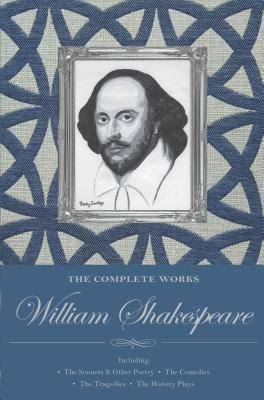
Description
All the plays and poems of William Shakespeare.
| Length | Emails required |
|---|---|
| 7,725 lines | 194 (based on one per day) |
Preview - part 72 of 194
CADE. Now is Mortimer lord of this city. And here, sitting upon London Stone, I charge and command that, of the city's cost, the pissing conduit run nothing but claret wine this first year of our reign. And now henceforward it shall be treason for any that calls me other than Lord Mortimer.
Enter a SOLDIER, running
SOLDIER. Jack Cade! Jack Cade! CADE. Knock him down there. [They kill him] SMITH. If this fellow be wise, he'll never call ye Jack Cade more; I think he hath a very fair warning. DICK. My lord, there's an army gathered together in Smithfield. CADE. Come then, let's go fight with them. But first go and set London Bridge on fire; and, if you can, burn down the Tower too. Come, let's away. Exeunt
SCENE VII. London. Smithfield
Alarums. MATTHEW GOFFE is slain, and all the rest. Then enter JACK CADE, with his company
CADE. So, sirs. Now go some and pull down the Savoy; others to th' Inns of Court; down with them all. DICK. I have a suit unto your lordship. CADE. Be it a lordship, thou shalt have it for that word. DICK. Only that the laws of England may come out of your mouth. JOHN. [Aside] Mass, 'twill be sore law then; for he was thrust in the mouth with a spear, and 'tis not whole yet. SMITH. [Aside] Nay, John, it will be stinking law; for his breath stinks with eating toasted cheese. CADE. I have thought upon it; it shall be so. Away, burn all the records of the realm. My mouth shall be the Parliament of England. JOHN. [Aside] Then we are like to have biting statutes, unless his teeth be pull'd out. CADE. And henceforward all things shall be in common.
Enter a MESSENGER
MESSENGER. My lord, a prize, a prize! Here's the Lord Say, which sold the towns in France; he that made us pay one and twenty fifteens, and one shining to the pound, the last subsidy.
Enter GEORGE BEVIS, with the LORD SAY
CADE. Well, he shall be beheaded for it ten times. Ah, thou say, thou serge, nay, thou buckram lord! Now art thou within point blank of our jurisdiction regal. What canst thou answer to my Majesty for giving up of Normandy unto Mounsieur Basimecu the Dauphin of France? Be it known unto thee by these presence, even the presence of Lord Mortimer, that I am the besom that must sweep the court clean of such filth as thou art. Thou hast most traitorously corrupted the youth of the realm in erecting a grammar school; and whereas, before, our forefathers had no other books but the score and the tally, thou hast caused printing to be us'd, and, contrary to the King, his crown, and dignity, thou hast built a paper-mill. It will be proved to thy face that thou hast men about thee that usually talk of a noun and a verb, and such abominable words as no Christian ear can endure to hear. Thou hast appointed justices of peace, to call poor men before them about matters they were not able to answer. Moreover, thou hast put them in prison, and because they could not read, thou hast hang'd them, when, indeed, only for that cause they have been most worthy to live. Thou dost ride in a foot-cloth, dost thou not? SAY. What of that? CADE. Marry, thou ought'st not to let thy horse wear a cloak, when honester men than thou go in their hose and doublets. DICK. And work in their shirt too, as myself, for example, that am a butcher. SAY. You men of Kent- DICK. What say you of Kent? SAY. Nothing but this: 'tis 'bona terra, mala gens.' CADE. Away with him, away with him! He speaks Latin. SAY. Hear me but speak, and bear me where you will. Kent, in the Commentaries Caesar writ, Is term'd the civil'st place of all this isle. Sweet is the country, because full of riches; The people liberal valiant, active, wealthy; Which makes me hope you are not void of pity. I sold not Maine, I lost not Normandy; Yet, to recover them, would lose my life. Justice with favour have I always done; Pray'rs and tears have mov'd me, gifts could never. When have I aught exacted at your hands, But to maintain the King, the realm, and you? Large gifts have I bestow'd on learned clerks, Because my book preferr'd me to the King, And seeing ignorance is the curse of God, Knowledge the wing wherewith we fly to heaven, Unless you be possess'd with devilish spirits You cannot but forbear to murder me. This tongue hath parley'd unto foreign kings For your behoof. CADE. Tut, when struck'st thou one blow in the field? SAY. Great men have reaching hands. Oft have I struck Those that I never saw, and struck them dead. GEORGE. O monstrous coward! What, to come behind folks? SAY. These cheeks are pale for watching for your good. CADE. Give him a box o' th' ear, and that will make 'em red again. SAY. Long sitting to determine poor men's causes Hath made me full of sickness and diseases. CADE. Ye shall have a hempen caudle then, and the help of hatchet. DICK. Why dost thou quiver, man? SAY. The palsy, and not fear, provokes me. CADE. Nay, he nods at us, as who should say 'I'll be even with you'; I'll see if his head will stand steadier on a pole, or no. Take him away, and behead him. SAY. Tell me: wherein have I offended most? Have I affected wealth or honour? Speak. Are my chests fill'd up with extorted gold? Is my apparel sumptuous to behold? Whom have I injur'd, that ye seek my death? These hands are free from guiltless bloodshedding, This breast from harbouring foul deceitful thoughts. O, let me live! CADE. [Aside] I feel remorse in myself with his words; but I'll bridle it. He shall die, an it be but for pleading so well for his life.- Away with him! He has a familiar under his tongue; he speaks not o' God's name. Go, take him away, I say, and strike off his head presently, and then break into his son-in-law's house, Sir James Cromer, and strike off his head, and bring them both upon two poles hither. ALL. It shall be done. SAY. Ah, countrymen! if when you make your pray'rs, God should be so obdurate as yourselves, How would it fare with your departed souls? And therefore yet relent and save my life. CADE. Away with him, and do as I command ye. [Exeunt some with LORD SAY] The proudest peer in the realm shall not wear a head on his shoulders, unless he pay me tribute; there shall not a maid be married, but she shall pay to me her maidenhead ere they have it. Men shall hold of me in capite; and we charge and command that their wives be as free as heart can wish or tongue can tell. DICK. My lord, when shall we go to Cheapside, and take up commodities upon our bills? CADE. Marry, presently. ALL. O, brave!
Re-enter one with the heads
CADE. But is not this braver? Let them kiss one another, for they lov'd well when they were alive. Now part them again, lest they consult about the giving up of some more towns in France. Soldiers, defer the spoil of the city until night; for with these borne before us instead of maces will we ride through the streets, and at every corner have them kiss. Away! Exeunt
SCENE VIII. Southwark
Alarum and retreat. Enter again CADE and all his rabblement
CADE. Up Fish Street! down Saint Magnus' Corner! Kill and knock down! Throw them into Thames! [Sound a parley] What noise is this I hear? Dare any be so bold to sound retreat or parley when I command them kill?
Enter BUCKINGHAM and old CLIFFORD, attended
BUCKINGHAM. Ay, here they be that dare and will disturb thee. And therefore yet relent, and save my life. Know, Cade, we come ambassadors from the King Unto the commons whom thou hast misled; And here pronounce free pardon to them all That will forsake thee and go home in peace. CLIFFORD. What say ye, countrymen? Will ye relent And yield to mercy whilst 'tis offer'd you, Or let a rebel lead you to your deaths? Who loves the King, and will embrace his pardon, Fling up his cap and say 'God save his Majesty!' Who hateth him and honours not his father, Henry the Fifth, that made all France to quake, Shake he his weapon at us and pass by. ALL. God save the King! God save the King! CADE. What, Buckingham and Clifford, are ye so brave? And you, base peasants, do ye believe him? Will you needs be hang'd with your about your necks? Hath my sword therefore broke through London gates, that you should leave me at the White Hart in Southwark? I thought ye would never have given out these arms till you had recovered your ancient freedom. But you are all recreants and dastards, and delight to live in slavery to the nobility. Let them break your backs with burdens, take your houses over your heads, ravish your wives and daughters before your faces. For me, I will make shift for one; and so God's curse light upon you all! ALL. We'll follow Cade, we'll follow Cade! CLIFFORD. Is Cade the son of Henry the Fifth, That thus you do exclaim you'll go with him? Will he conduct you through the heart of France, And make the meanest of you earls and dukes? Alas, he hath no home, no place to fly to; Nor knows he how to live but by the spoil, Unless by robbing of your friends and us. Were't not a shame that whilst you live at jar The fearful French, whom you late vanquished, Should make a start o'er seas and vanquish you? Methinks already in this civil broil I see them lording it in London streets, Crying 'Villiago!' unto all they meet. Better ten thousand base-born Cades miscarry Than you should stoop unto a Frenchman's mercy. To France, to France, and get what you have lost; Spare England, for it is your native coast. Henry hath money; you are strong and manly. God on our side, doubt not of victory. ALL. A Clifford! a Clifford! We'll follow the King and Clifford. CADE. Was ever feather so lightly blown to and fro as this multitude? The name of Henry the Fifth hales them to an hundred mischiefs, and makes them leave me desolate. I see them lay their heads together to surprise me. My sword make way for me for here is no staying. In despite of the devils and hell, have through the very middest of you! and heavens and honour be witness that no want of resolution in me, but only my followers' base and ignominious treasons, makes me betake me to my heels. Exit BUCKINGHAM. What, is he fled? Go some, and follow him; And he that brings his head unto the King Shall have a thousand crowns for his reward. Exeunt some of them Follow me, soldiers; we'll devise a mean To reconcile you all unto the King. Exeunt
SCENE IX. Killing, worth Castle
Sound trumpets. Enter KING, QUEEN, and SOMERSET, on the terrace
KING HENRY. Was ever king that joy'd an earthly throne And could command no more content than I? No sooner was I crept out of my cradle But I was made a king, at nine months old. Was never subject long'd to be a King As I do long and wish to be a subject.
Enter BUCKINGHAM and old CLIFFORD
BUCKINGHAM. Health and glad tidings to your Majesty! KING HENRY. Why, Buckingham, is the traitor Cade surpris'd? Or is he but retir'd to make him strong?
Enter, below, multitudes, with halters about their necks
CLIFFORD. He is fled, my lord, and all his powers do yield, And humbly thus, with halters on their necks, Expect your Highness' doom of life or death. KING HENRY. Then, heaven, set ope thy everlasting gates, To entertain my vows of thanks and praise! Soldiers, this day have you redeem'd your lives, And show'd how well you love your Prince and country. Continue still in this so good a mind, And Henry, though he be infortunate, Assure yourselves, will never be unkind. And so, with thanks and pardon to you all, I do dismiss you to your several countries. ALL. God save the King! God save the King!
Enter a MESSENGER
MESSENGER. Please it your Grace to be advertised The Duke of York is newly come from Ireland And with a puissant and a mighty power Of gallowglasses and stout kerns Is marching hitherward in proud array, And still proclaimeth, as he comes along, His arms are only to remove from thee The Duke of Somerset, whom he terms a traitor. KING HENRY. Thus stands my state, 'twixt Cade and York distress'd; Like to a ship that, having scap'd a tempest, Is straightway calm'd, and boarded with a pirate; But now is Cade driven back, his men dispers'd, And now is York in arms to second him. I pray thee, Buckingham, go and meet him And ask him what's the reason of these arms. Tell him I'll send Duke Edmund to the Tower- And Somerset, we will commit thee thither Until his army be dismiss'd from him. SOMERSET. My lord, I'll yield myself to prison willingly, Or unto death, to do my country good. KING HENRY. In any case be not too rough in terms, For he is fierce and cannot brook hard language. BUCKINGHAM. I will, my lord, and doubt not so to deal As all things shall redound unto your good. KING HENRY. Come, wife, let's in, and learn to govern better; For yet may England curse my wretched reign. Flourish. Exeunt
SCENE X. Kent. Iden's garden
Enter CADE
CADE. Fie on ambitions! Fie on myself, that have a sword and yet am ready to famish! These five days have I hid me in these woods and durst not peep out, for all the country is laid for me; but now am I so hungry that, if I might have a lease of my life for a thousand years, I could stay no longer. Wherefore, on a brick wall have I climb'd into this garden, to see if I can eat grass or pick a sallet another while, which is not amiss to cool a man's stomach this hot weather. And I think this word 'sallet' was born to do me good; for many a time, but for a sallet, my brain-pain had been cleft with a brown bill; and many a time, when I have been dry, and bravely marching, it hath serv'd me instead of a quart-pot to drink in; and now the word 'sallet' must serve me to feed on.
Enter IDEN
IDEN. Lord, who would live turmoiled in the court And may enjoy such quiet walks as these? This small inheritance my father left me Contenteth me, and worth a monarchy. I seek not to wax great by others' waning Or gather wealth I care not with what envy; Sufficeth that I have maintains my state, And sends the poor well pleased from my gate. CADE. Here's the lord of the soil come to seize me for a stray, for entering his fee-simple without leave. Ah, villain, thou wilt betray me, and get a thousand crowns of the King by carrying my head to him; but I'll make thee eat iron like an ostrich and swallow my sword like a great pin ere thou and I part. IDEN. Why, rude companion, whatsoe'er thou be, I know thee not; why then should I betray thee? Is't not enough to break into my garden And like a thief to come to rob my grounds, Climbing my walls in spite of me the owner, But thou wilt brave me with these saucy terms? CADE. Brave thee? Ay, by the best blood that ever was broach'd, and beard thee too. Look on me well: I have eat no meat these five days, yet come thou and thy five men and if I do not leave you all as dead as a door-nail, I pray God I may never eat grass more. IDEN. Nay, it shall ne'er be said, while England stands, That Alexander Iden, an esquire of Kent, Took odds to combat a poor famish'd man. Oppose thy steadfast-gazing eyes to mine; See if thou canst outface me with thy looks; Set limb to limb, and thou art far the lesser; Thy hand is but a finger to my fist, Thy leg a stick compared with this truncheon; My foot shall fight with all the strength thou hast, And if mine arm be heaved in the air, Thy grave is digg'd already in the earth. As for words, whose greatness answers words, Let this my sword report what speech forbears. CADE. By my valour, the most complete champion that ever I heard! Steel, if thou turn the edge, or cut not out the burly bon'd clown in chines of beef ere thou sleep in thy sheath, I beseech God on my knees thou mayst be turn'd to hobnails. [Here they fight; CADE falls] O, I am slain! famine and no other hath slain me. Let ten thousand devils come against me, and give me but the ten meals I have lost, and I'd defy them all. Wither, garden, and be henceforth a burying place to all that do dwell in this house, because the unconquered soul of Cade is fled. IDEN. Is't Cade that I have slain, that monstrous traitor? Sword, I will hallow thee for this thy deed And hang thee o'er my tomb when I am dead. Ne'er shall this blood be wiped from thy point, But thou shalt wear it as a herald's coat To emblaze the honour that thy master got. CADE. Iden, farewell; and be proud of thy victory. Tell Kent from me she hath lost her best man, and exhort all the world to be cowards; for I, that never feared any, am vanquished by famine, not by valour. [Dies] IDEN. How much thou wrong'st me, heaven be my judge. Die, damned wretch, the curse of her that bare thee! And as I thrust thy body in with my sword, So wish I, I might thrust thy soul to hell. Hence will I drag thee headlong by the heels Unto a dunghill, which shall be thy grave, And there cut off thy most ungracious head, Which I will bear in triumph to the King, Leaving thy trunk for crows to feed upon. Exit
<>
ACT V. SCENE I. Fields between Dartford and Blackheath
Enter YORK, and his army of Irish, with drum and colours