The Complete Works
William Shakespeare
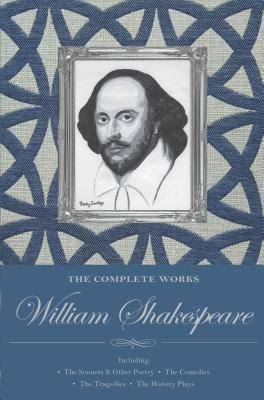
Description
All the plays and poems of William Shakespeare.
| Length | Emails required |
|---|---|
| 7,725 lines | 194 (based on one per day) |
Preview - part 179 of 194
Enter SIR TOBY
OLIVIA. By mine honour, half drunk! What is he at the gate, cousin? SIR TOBY. A gentleman. OLIVIA. A gentleman! What gentleman? SIR TOBY. 'Tis a gentleman here. [Hiccups] A plague o' these pickle-herring! How now, sot! CLOWN. Good Sir Toby! OLIVIA. Cousin, cousin, how have you come so early by this lethargy? SIR TOBY. Lechery! I defy lechery. There's one at the gate. OLIVIA. Ay, marry; what is he? SIR TOBY. Let him be the devil an he will, I care not; give me faith, say I. Well, it's all one. Exit OLIVIA. What's a drunken man like, fool? CLOWN. Like a drown'd man, a fool, and a madman: one draught above heat makes him a fool; the second mads him; and a third drowns him. OLIVIA. Go thou and seek the crowner, and let him sit o' my coz; for he's in the third degree of drink, he's drown'd; go look after him. CLOWN. He is but mad yet, madonna, and the fool shall look to the madman. Exit
Re-enter MALVOLIO
MALVOLIO. Madam, yond young fellow swears he will speak with you. I told him you were sick; he takes on him to understand so much, and therefore comes to speak with you. I told him you were asleep; he seems to have a foreknowledge of that too, and therefore comes to speak with you. What is to be said to him, lady? He's fortified against any denial. OLIVIA. Tell him he shall not speak with me. MALVOLIO. Has been told so; and he says he'll stand at your door like a sheriff's post, and be the supporter to a bench, but he'll speak with you. OLIVIA. What kind o' man is he? MALVOLIO. Why, of mankind. OLIVIA. What manner of man? MALVOLIO. Of very ill manner; he'll speak with you, will you or no. OLIVIA. Of what personage and years is he? MALVOLIO. Not yet old enough for a man, nor young enough for a boy; as a squash is before 'tis a peascod, or a codling when 'tis almost an apple; 'tis with him in standing water, between boy and man. He is very well-favour'd, and he speaks very shrewishly; one would think his mother's milk were scarce out of him. OLIVIA. Let him approach. Call in my gentlewoman. MALVOLIO. Gentlewoman, my lady calls. Exit
Re-enter MARIA
OLIVIA. Give me my veil; come, throw it o'er my face; We'll once more hear Orsino's embassy.
Enter VIOLA
VIOLA. The honourable lady of the house, which is she? OLIVIA. Speak to me; I shall answer for her. Your will? VIOLA. Most radiant, exquisite, and unmatchable beauty- I pray you tell me if this be the lady of the house, for I never saw her. I would be loath to cast away my speech; for, besides that it is excellently well penn'd, I have taken great pains to con it. Good beauties, let me sustain no scorn; I am very comptible, even to the least sinister usage. OLIVIA. Whence came you, sir? VIOLA. I can say little more than I have studied, and that question's out of my part. Good gentle one, give me modest assurance if you be the lady of the house, that I may proceed in my speech. OLIVIA. Are you a comedian? VIOLA. No, my profound heart; and yet, by the very fangs of malice I swear, I am not that I play. Are you the lady of the house? OLIVIA. If I do not usurp myself, I am. VIOLA. Most certain, if you are she, you do usurp yourself; for what is yours to bestow is not yours to reserve. But this is from my commission. I will on with my speech in your praise, and then show you the heart of my message. OLIVIA. Come to what is important in't. I forgive you the praise. VIOLA. Alas, I took great pains to study it, and 'tis poetical. OLIVIA. It is the more like to be feigned; I pray you keep it in. I heard you were saucy at my gates, and allow'd your approach rather to wonder at you than to hear you. If you be not mad, be gone; if you have reason, be brief; 'tis not that time of moon with me to make one in so skipping dialogue. MARIA. Will you hoist sail, sir? Here lies your way. VIOLA. No, good swabber, I am to hull here a little longer. Some mollification for your giant, sweet lady. OLIVIA. Tell me your mind. VIOLA. I am a messenger. OLIVIA. Sure, you have some hideous matter to deliver, when the courtesy of it is so fearful. Speak your office. VIOLA. It alone concerns your ear. I bring no overture of war, no taxation of homage: I hold the olive in my hand; my words are as full of peace as matter. OLIVIA. Yet you began rudely. What are you? What would you? VIOLA. The rudeness that hath appear'd in me have I learn'd from my entertainment. What I am and what I would are as secret as maidenhead- to your cars, divinity; to any other's, profanation. OLIVIA. Give us the place alone; we will hear this divinity. [Exeunt MARIA and ATTENDANTS] Now, sir, what is your text? VIOLA. Most sweet lady- OLIVIA. A comfortable doctrine, and much may be said of it. Where lies your text? VIOLA. In Orsino's bosom. OLIVIA. In his bosom! In what chapter of his bosom? VIOLA. To answer by the method: in the first of his heart. OLIVIA. O, I have read it; it is heresy. Have you no more to say? VIOLA. Good madam, let me see your face. OLIVIA. Have you any commission from your lord to negotiate with my face? You are now out of your text; but we will draw the curtain and show you the picture. [Unveiling] Look you, sir, such a one I was this present. Is't not well done? VIOLA. Excellently done, if God did all. OLIVIA. 'Tis in grain, sir; 'twill endure wind and weather. VIOLA. 'Tis beauty truly blent, whose red and white Nature's own sweet and cunning hand laid on. Lady, you are the cruell'st she alive, If you will lead these graces to the grave, And leave the world no copy. OLIVIA. O, sir, I will not be so hard-hearted; I will give out divers schedules of my beauty. It shall be inventoried, and every particle and utensil labell'd to my will: as- item, two lips indifferent red; item, two grey eyes with lids to them; item, one neck, one chin, and so forth. Were you sent hither to praise me? VIOLA. I see you what you are: you are too proud; But, if you were the devil, you are fair. My lord and master loves you- O, such love Could be but recompens'd though you were crown'd The nonpareil of beauty! OLIVIA. How does he love me? VIOLA. With adorations, fertile tears, With groans that thunder love, with sighs of fire. OLIVIA. Your lord does know my mind; I cannot love him. Yet I suppose him virtuous, know him noble, Of great estate, of fresh and stainless youth; In voices well divulg'd, free, learn'd, and valiant, And in dimension and the shape of nature A gracious person; but yet I cannot love him. He might have took his answer long ago. VIOLA. If I did love you in my master's flame, With such a suff'ring, such a deadly life, In your denial I would find no sense; I would not understand it. OLIVIA. Why, what would you? VIOLA. Make me a willow cabin at your gate, And call upon my soul within the house; Write loyal cantons of contemned love And sing them loud even in the dead of night; Halloo your name to the reverberate hals, And make the babbling gossip of the air Cry out 'Olivia!' O, you should not rest Between the elements of air and earth But you should pity me! OLIVIA. You might do much. What is your parentage? VIOLA. Above my fortunes, yet my state is well: I am a gentleman. OLIVIA. Get you to your lord. I cannot love him; let him send no more- Unless perchance you come to me again To tell me how he takes it. Fare you well. I thank you for your pains; spend this for me. VIOLA. I am no fee'd post, lady; keep your purse; My master, not myself, lacks recompense. Love make his heart of flint that you shall love; And let your fervour, like my master's, be Plac'd in contempt! Farewell, fair cruelty. Exit OLIVIA. 'What is your parentage?' 'Above my fortunes, yet my state is well: I am a gentleman.' I'll be sworn thou art; Thy tongue, thy face, thy limbs, actions, and spirit, Do give thee five-fold blazon. Not too fast! Soft, soft! Unless the master were the man. How now! Even so quickly may one catch the plague? Methinks I feel this youth's perfections With an invisible and subtle stealth To creep in at mine eyes. Well, let it be. What ho, Malvolio!
Re-enter MALVOLIO
MALVOLIO. Here, madam, at your service. OLIVIA. Run after that same peevish messenger, The County's man. He left this ring behind him, Would I or not. Tell him I'll none of it. Desire him not to flatter with his lord, Nor hold him up with hopes; I am not for him. If that the youth will come this way to-morrow, I'll give him reasons for't. Hie thee, Malvolio. MALVOLIO. Madam, I will. Exit OLIVIA. I do I know not what, and fear to find Mine eye too great a flatterer for my mind. Fate, show thy force: ourselves we do not owe; What is decreed must be; and be this so! Exit
<>
ACT II. SCENE I. The sea-coast
Enter ANTONIO and SEBASTIAN
ANTONIO. Will you stay no longer; nor will you not that I go with you? SEBASTIAN. By your patience, no. My stars shine darkly over me; the malignancy of my fate might perhaps distemper yours; therefore I shall crave of you your leave that I may bear my evils alone. It were a bad recompense for your love to lay any of them on you. ANTONIO. Let me know of you whither you are bound. SEBASTIAN. No, sooth, sir; my determinate voyage is mere extravagancy. But I perceive in you so excellent a touch of modesty that you will not extort from me what I am willing to keep in; therefore it charges me in manners the rather to express myself. You must know of me then, Antonio, my name is Sebastian, which I call'd Roderigo; my father was that Sebastian of Messaline whom I know you have heard of. He left behind him myself and a sister, both born in an hour; if the heavens had been pleas'd, would we had so ended! But you, sir, alter'd that; for some hour before you took me from the breach of the sea was my sister drown'd. ANTONIO. Alas the day! SEBASTIAN. A lady, sir, though it was said she much resembled me, was yet of many accounted beautiful; but though I could not with such estimable wonder overfar believe that, yet thus far I will boldly publish her: she bore mind that envy could not but call fair. She is drown'd already, sir, with salt water, though I seem to drown her remembrance again with more. ANTONIO. Pardon me, sir, your bad entertainment. SEBASTIAN. O good Antonio, forgive me your trouble. ANTONIO. If you will not murder me for my love, let me be your servant. SEBASTIAN. If you will not undo what you have done- that is, kill him whom you have recover'd-desire it not. Fare ye well at once; my bosom is full of kindness, and I am yet so near the manners of my mother that, upon the least occasion more, mine eyes will tell tales of me. I am bound to the Count Orsino's court. Farewell. Exit ANTONIO. The gentleness of all the gods go with thee! I have many cnemies in Orsino's court, Else would I very shortly see thee there. But come what may, I do adore thee so That danger shall seem sport, and I will go. Exit
SCENE II. A street
Enter VIOLA and MALVOLIO at several doors
MALVOLIO. Were you not ev'n now with the Countess Olivia? VIOLA. Even now, sir; on a moderate pace I have since arriv'd but hither. MALVOLIO. She returns this ring to you, sir; you might have saved me my pains, to have taken it away yourself. She adds, moreover, that you should put your lord into a desperate assurance she will none of him. And one thing more: that you be never so hardy to come again in his affairs, unless it be to report your lord's taking of this. Receive it so. VIOLA. She took the ring of me; I'll none of it. MALVOLIO. Come, sir, you peevishly threw it to her; and her will is it should be so return'd. If it be worth stooping for, there it lies in your eye; if not, be it his that finds it. Exit VIOLA. I left no ring with her; what means this lady? Fortune forbid my outside have not charm'd her! She made good view of me; indeed, so much That methought her eyes had lost her tongue, For she did speak in starts distractedly. She loves me, sure: the cunning of her passion Invites me in this churlish messenger. None of my lord's ring! Why, he sent her none. I am the man. If it be so- as 'tis- Poor lady, she were better love a dream. Disguise, I see thou art a wickedness Wherein the pregnant enemy does much. How easy is it for the proper-false In women's waxen hearts to set their forms! Alas, our frailty is the cause, not we! For such as we are made of, such we be. How will this fadge? My master loves her dearly, And I, poor monster, fond as much on him; And she, mistaken, seems to dote on me. What will become of this? As I am man, My state is desperate for my master's love; As I am woman- now alas the day!- What thriftless sighs shall poor Olivia breathe! O Time, thou must untangle this, not I; It is too hard a knot for me t' untie! Exit
SCENE III. OLIVIA'S house
Enter SIR TOBY and SIR ANDREW
SIR TOBY. Approach, Sir Andrew. Not to be abed after midnight is to be up betimes; and 'diluculo surgere' thou know'st- AGUECHEEK. Nay, by my troth, I know not; but I know to be up late is to be up late. SIR TOBY. A false conclusion! I hate it as an unfill'd can. To be up after midnight and to go to bed then is early; so that to go to bed after midnight is to go to bed betimes. Does not our lives consist of the four elements? AGUECHEEK. Faith, so they say; but I think it rather consists of eating and drinking. SIR TOBY. Th'art a scholar; let us therefore eat and drink. Marian, I say! a stoup of wine.
Enter CLOWN
AGUECHEEK. Here comes the fool, i' faith. CLOWN. How now, my hearts! Did you never see the picture of 'we three'? SIR TOBY. Welcome, ass. Now let's have a catch. AGUECHEEK. By my troth, the fool has an excellent breast. I had rather than forty shillings I had such a leg, and so sweet a breath to sing, as the fool has. In sooth, thou wast in very gracious fooling last night, when thou spok'st of Pigrogromitus, of the Vapians passing the equinoctial of Queubus; 'twas very good, i' faith. I sent thee sixpence for thy leman; hadst it? CLOWN. I did impeticos thy gratillity; for Malvolio's nose is no whipstock. My lady has a white hand, and the Myrmidons are no bottle-ale houses. AGUECHEEK. Excellent! Why, this is the best fooling, when all is done. Now, a song. SIR TOBY. Come on, there is sixpence for you. Let's have a song. AGUECHEEK. There's a testril of me too; if one knight give a- CLOWN. Would you have a love-song, or a song of good life? SIR TOBY. A love-song, a love-song. AGUECHEEK. Ay, ay; I care not for good life.
CLOWN sings
O mistress mine, where are you roaming? O, stay and hear; your true love's coming, That can sing both high and low. Trip no further, pretty sweeting; Journeys end in lovers meeting, Every wise man's son doth know.
AGUECHEEK. Excellent good, i' faith! SIR TOBY. Good, good!
CLOWN sings
What is love? 'Tis not hereafter; Present mirth hath present laughter; What's to come is still unsure. In delay there lies no plenty, Then come kiss me, sweet and twenty; Youth's a stuff will not endure.
AGUECHEEK. A mellifluous voice, as I am true knight. SIR TOBY. A contagious breath. AGUECHEEK. Very sweet and contagious, i' faith. SIR TOBY. To hear by the nose, it is dulcet in contagion. But shall we make the welkin dance indeed? Shall we rouse the night-owl in a catch that will draw three souls out of one weaver? Shall we do that? AGUECHEEK. An you love me, let's do't. I am dog at a catch. CLOWN. By'r lady, sir, and some dogs will catch well. AGUECHEEK. Most certain. Let our catch be 'Thou knave.' CLOWN. 'Hold thy peace, thou knave' knight? I shall be constrain'd in't to call thee knave, knight. AGUECHEEK. 'Tis not the first time I have constrained one to call me knave. Begin, fool: it begins 'Hold thy peace.' CLOWN. I shall never begin if I hold my peace. AGUECHEEK. Good, i' faith! Come, begin. [Catch sung]
Enter MARIA
MARIA. What a caterwauling do you keep here! If my lady have not call'd up her steward Malvolio, and bid him turn you out of doors, never trust me. SIR TOBY. My lady's a Cataian, we are politicians, Malvolio's a Peg-a-Ramsey, and [Sings] Three merry men be we. Am not I consanguineous? Am I not of her blood? Tilly-vally, lady. [Sings] There dwelt a man in Babylon, Lady, lady. CLOWN. Beshrew me, the knight's in admirable fooling. AGUECHEEK. Ay, he does well enough if he be dispos'd, and so do I too; he does it with a better grace, but I do it more natural. SIR TOBY. [Sings] O' the twelfth day of December- MARIA. For the love o' God, peace!
Enter MALVOLIO
MALVOLIO. My masters, are you mad? Or what are you? Have you no wit, manners, nor honesty, but to gabble like tinkers at this time of night? Do ye make an ale-house of my lady's house, that ye squeak out your coziers' catches without any mitigation or remorse of voice? Is there no respect of place, persons, nor time, in you? SIR TOBY. We did keep time, sir, in our catches. Sneck up! MALVOLIO. Sir Toby, I must be round with you. My lady bade me tell you that, though she harbours you as her kins-man, she's nothing allied to your disorders. If you can separate yourself and your misdemeanours, you are welcome to the house; if not, and it would please you to take leave of her, she is very willing to bid you farewell. SIR TOBY. [Sings] Farewell, dear heart, since I must needs be gone. MARIA. Nay, good Sir Toby. CLOWN. [Sings] His eyes do show his days are almost done. MALVOLIO. Is't even so? SIR TOBY. [Sings] But I will never die. [Falls down] CLOWN. [Sings] Sir Toby, there you lie. MALVOLIO. This is much credit to you. SIR TOBY. [Sings] Shall I bid him go? CLOWN. [Sings] What an if you do? SIR TOBY. [Sings] Shall I bid him go, and spare not? CLOWN. [Sings] O, no, no, no, no, you dare not. SIR TOBY. [Rising] Out o' tune, sir! Ye lie. Art any more than a steward? Dost thou think, because thou art virtuous, there shall be no more cakes and ale? CLOWN. Yes, by Saint Anne; and ginger shall be hot i' th' mouth too. SIR TOBY. Th' art i' th' right. Go, sir, rub your chain with crumbs. A stoup of wine, Maria! MALVOLIO. Mistress Mary, if you priz'd my lady's favour at anything more than contempt, you would not give means for this uncivil rule; she shall know of it, by this hand. Exit MARIA. Go shake your ears. AGUECHEEK. 'Twere as good a deed as to drink when a man's ahungry, to challenge him the field, and then to break promise with him and make a fool of him. SIR TOBY. Do't, knight. I'll write thee a challenge; or I'll deliver thy indignation to him by word of mouth. MARIA. Sweet Sir Toby, be patient for to-night; since the youth of the Count's was to-day with my lady, she is much out of quiet. For Monsieur Malvolio, let me alone with him; if I do not gull him into a nayword, and make him a common recreation, do not think I have wit enough to lie straight in my bed. I know I can do it. SIR TOBY. Possess us, possess us; tell us something of him. MARIA. Marry, sir, sometimes he is a kind of Puritan. AGUECHEEK. O, if I thought that, I'd beat him like a dog. SIR TOBY. What, for being a Puritan? Thy exquisite reason, dear knight? AGUECHEEK. I have no exquisite reason for't, but I have reason good enough. MARIA. The devil a Puritan that he is, or anything constantly but a time-pleaser; an affection'd ass that cons state without book and utters it by great swarths; the best persuaded of himself, so cramm'd, as he thinks, with excellencies that it is his grounds of faith that all that look on him love him; and on that vice in him will my revenge find notable cause to work. SIR TOBY. What wilt thou do? MARIA. I will drop in his way some obscure epistles of love; wherein, by the colour of his beard, the shape of his leg, the manner of his gait, the expressure of his eye, forehead, and complexion, he shall find himself most feelingly personated. I can write very like my lady, your niece; on forgotten matter we can hardly make distinction of our hands. SIR TOBY. Excellent! I smell a device. AGUECHEEK. I have't in my nose too. SIR TOBY. He shall think, by the letters that thou wilt drop, that they come from my niece, and that she's in love with him. MARIA. My purpose is, indeed, a horse of that colour. AGUECHEEK. And your horse now would make him an ass. MARIA. Ass, I doubt not. AGUECHEEK. O, 'twill be admirable! MARIA. Sport royal, I warrant you. I know my physic will work with him. I will plant you two, and let the fool make a third, where he shall find the letter; observe his construction of it. For this night, to bed, and dream on the event. Farewell. Exit SIR TOBY. Good night, Penthesilea. AGUECHEEK. Before me, she's a good wench. SIR TOBY. She's a beagle true-bred, and one that adores me. What o' that? AGUECHEEK. I was ador'd once too. SIR TOBY. Let's to bed, knight. Thou hadst need send for more money. AGUECHEEK. If I cannot recover your niece, I am a foul way out. SIR TOBY. Send for money, knight; if thou hast her not i' th' end, call me Cut. AGUECHEEK. If I do not, never trust me; take it how you will. SIR TOBY. Come, come, I'll go burn some sack; 'tis too late to go to bed now. Come, knight; come, knight. Exeunt
SCENE IV. The DUKE'S palace
Enter DUKE, VIOLA, CURIO, and OTHERS
DUKE. Give me some music. Now, good morrow, friends. Now, good Cesario, but that piece of song, That old and antique song we heard last night; Methought it did relieve my passion much, More than light airs and recollected terms Of these most brisk and giddy-paced times. Come, but one verse. CURIO. He is not here, so please your lordship, that should sing it. DUKE. Who was it? CURIO. Feste, the jester, my lord; a fool that the Lady Olivia's father took much delight in. He is about the house. DUKE. Seek him out, and play the tune the while. Exit CURIO. [Music plays] Come hither, boy. If ever thou shalt love, In the sweet pangs of it remember me; For such as I am all true lovers are, Unstaid and skittish in all motions else Save in the constant image of the creature That is belov'd. How dost thou like this tune? VIOLA. It gives a very echo to the seat Where Love is thron'd. DUKE. Thou dost speak masterly. My life upon't, young though thou art, thine eye Hath stay'd upon some favour that it loves; Hath it not, boy? VIOLA. A little, by your favour. DUKE. What kind of woman is't? VIOLA. Of your complexion. DUKE. She is not worth thee, then. What years, i' faith? VIOLA. About your years, my lord. DUKE. Too old, by heaven! Let still the woman take An elder than herself; so wears she to him, So sways she level in her husband's heart. For, boy, however we do praise ourselves, Our fancies are more giddy and unfirm, More longing, wavering, sooner lost and won, Than women's are. VIOLA. I think it well, my lord. DUKE. Then let thy love be younger than thyself, Or thy affection cannot hold the bent; For women are as roses, whose fair flow'r Being once display'd doth fall that very hour. VIOLA. And so they are; alas, that they are so! To die, even when they to perfection grow!