The Complete Works
William Shakespeare
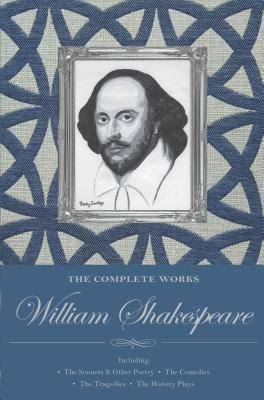
Description
All the plays and poems of William Shakespeare.
| Length | Emails required |
|---|---|
| 7,725 lines | 194 (based on one per day) |
Preview - part 144 of 194
Re-enter GLOUCESTER and BUCKINGHAM
GLOUCESTER. I pray you all, tell me what they deserve That do conspire my death with devilish plots Of damned witchcraft, and that have prevail'd Upon my body with their hellish charms? HASTINGS. The tender love I bear your Grace, my lord, Makes me most forward in this princely presence To doom th' offenders, whosoe'er they be. I say, my lord, they have deserved death. GLOUCESTER. Then be your eyes the witness of their evil. Look how I am bewitch'd; behold, mine arm Is like a blasted sapling wither'd up. And this is Edward's wife, that monstrous witch, Consorted with that harlot strumpet Shore, That by their witchcraft thus have marked me. HASTINGS. If they have done this deed, my noble lord- GLOUCESTER. If?-thou protector of this damned strumpet, Talk'st thou to me of ifs? Thou art a traitor. Off with his head! Now by Saint Paul I swear I will not dine until I see the same. Lovel and Ratcliff, look that it be done. The rest that love me, rise and follow me. Exeunt all but HASTINGS, LOVEL, and RATCLIFF HASTINGS. Woe, woe, for England! not a whit for me; For I, too fond, might have prevented this. STANLEY did dream the boar did raze our helms, And I did scorn it and disdain to fly. Three times to-day my foot-cloth horse did stumble, And started when he look'd upon the Tower, As loath to bear me to the slaughter-house. O, now I need the priest that spake to me! I now repent I told the pursuivant, As too triumphing, how mine enemies To-day at Pomfret bloodily were butcher'd, And I myself secure in grace and favour. O Margaret, Margaret, now thy heavy curse Is lighted on poor Hastings' wretched head! RATCLIFF. Come, come, dispatch; the Duke would be at dinner. Make a short shrift; he longs to see your head. HASTINGS. O momentary grace of mortal men, Which we more hunt for than the grace of God! Who builds his hope in air of your good looks Lives like a drunken sailor on a mast, Ready with every nod to tumble down Into the fatal bowels of the deep. LOVEL. Come, come, dispatch; 'tis bootless to exclaim. HASTINGS. O bloody Richard! Miserable England! I prophesy the fearfull'st time to thee That ever wretched age hath look'd upon. Come, lead me to the block; bear him my head. They smile at me who shortly shall be dead. Exeunt
SCENE 5.
London. The Tower-walls
Enter GLOUCESTER and BUCKINGHAM in rotten armour, marvellous ill-favoured
GLOUCESTER. Come, cousin, canst thou quake and change thy colour, Murder thy breath in middle of a word, And then again begin, and stop again, As if thou were distraught and mad with terror? BUCKINGHAM. Tut, I can counterfeit the deep tragedian; Speak and look back, and pry on every side, Tremble and start at wagging of a straw, Intending deep suspicion. Ghastly looks Are at my service, like enforced smiles; And both are ready in their offices At any time to grace my stratagems. But what, is Catesby gone? GLOUCESTER. He is; and, see, he brings the mayor along.
Enter the LORD MAYOR and CATESBY
BUCKINGHAM. Lord Mayor- GLOUCESTER. Look to the drawbridge there! BUCKINGHAM. Hark! a drum. GLOUCESTER. Catesby, o'erlook the walls. BUCKINGHAM. Lord Mayor, the reason we have sent- GLOUCESTER. Look back, defend thee; here are enemies. BUCKINGHAM. God and our innocence defend and guard us!
Enter LOVEL and RATCLIFF, with HASTINGS' head
GLOUCESTER. Be patient; they are friends-Ratcliff and Lovel. LOVEL. Here is the head of that ignoble traitor, The dangerous and unsuspected Hastings. GLOUCESTER. So dear I lov'd the man that I must weep. I took him for the plainest harmless creature That breath'd upon the earth a Christian; Made him my book, wherein my soul recorded The history of all her secret thoughts. So smooth he daub'd his vice with show of virtue That, his apparent open guilt omitted, I mean his conversation with Shore's wife- He liv'd from all attainder of suspects. BUCKINGHAM. Well, well, he was the covert'st shelt'red traitor That ever liv'd. Would you imagine, or almost believe- Were't not that by great preservation We live to tell it-that the subtle traitor This day had plotted, in the council-house, To murder me and my good Lord of Gloucester. MAYOR. Had he done so? GLOUCESTER. What! think you we are Turks or Infidels? Or that we would, against the form of law, Proceed thus rashly in the villain's death But that the extreme peril of the case, The peace of England and our persons' safety, Enforc'd us to this execution? MAYOR. Now, fair befall you! He deserv'd his death; And your good Graces both have well proceeded To warn false traitors from the like attempts. I never look'd for better at his hands After he once fell in with Mistress Shore. BUCKINGHAM. Yet had we not determin'd he should die Until your lordship came to see his end- Which now the loving haste of these our friends, Something against our meanings, have prevented- Because, my lord, I would have had you heard The traitor speak, and timorously confess The manner and the purpose of his treasons: That you might well have signified the same Unto the citizens, who haply may Misconster us in him and wail his death. MAYOR. But, my good lord, your Grace's words shall serve As well as I had seen and heard him speak; And do not doubt, right noble Princes both, But I'll acquaint our duteous citizens With all your just proceedings in this cause. GLOUCESTER. And to that end we wish'd your lordship here, T' avoid the the the censures of the carping world. BUCKINGHAM. Which since you come too late of our intent, Yet witness what you hear we did intend. And so, my good Lord Mayor, we bid farewell. Exit LORD MAYOR GLOUCESTER. Go, after, after, cousin Buckingham. The Mayor towards Guildhall hies him in an post. There, at your meet'st advantage of the time, Infer the bastardy of Edward's children. Tell them how Edward put to death a citizen Only for saying he would make his son Heir to the crown-meaning indeed his house, Which by the sign thereof was termed so. Moreover, urge his hateful luxury And bestial appetite in change of lust, Which stretch'd unto their servants, daughters, wives, Even where his raging eye or savage heart Without control lusted to make a prey. Nay, for a need, thus far come near my person: Tell them, when that my mother went with child Of that insatiate Edward, noble York My princely father then had wars in France And, by true computation of the time, Found that the issue was not his begot; Which well appeared in his lineaments, Being nothing like the noble Duke my father. Yet touch this sparingly, as 'twere far off; Because, my lord, you know my mother lives. BUCKINGHAM. Doubt not, my lord, I'll play the orator As if the golden fee for which I plead Were for myself; and so, my lord, adieu. GLOUCESTER. If you thrive well, bring them to Baynard's Castle; Where you shall find me well accompanied With reverend fathers and well learned bishops. BUCKINGHAM. I go; and towards three or four o'clock Look for the news that the Guildhall affords. Exit GLOUCESTER. Go, Lovel, with all speed to Doctor Shaw. [To CATESBY] Go thou to Friar Penker. Bid them both Meet me within this hour at Baynard's Castle. Exeunt all but GLOUCESTER Now will I go to take some privy order To draw the brats of Clarence out of sight, And to give order that no manner person Have any time recourse unto the Princes. Exit
SCENE 6.
London. A street
Enter a SCRIVENER
SCRIVENER. Here is the indictment of the good Lord Hastings; Which in a set hand fairly is engross'd That it may be to-day read o'er in Paul's. And mark how well the sequel hangs together: Eleven hours I have spent to write it over, For yesternight by Catesby was it sent me; The precedent was full as long a-doing; And yet within these five hours Hastings liv'd, Untainted, unexamin'd, free, at liberty. Here's a good world the while! Who is so gros That cannot see this palpable device? Yet who's so bold but says he sees it not? Bad is the world; and all will come to nought, When such ill dealing must be seen in thought. Exit
SCENE 7.
London. Baynard's Castle
Enter GLOUCESTER and BUCKINGHAM, at several doors
GLOUCESTER. How now, how now! What say the citizens? BUCKINGHAM. Now, by the holy Mother of our Lord, The citizens are mum, say not a word. GLOUCESTER. Touch'd you the bastardy of Edward's children? BUCKINGHAM. I did; with his contract with Lady Lucy, And his contract by deputy in France; Th' insatiate greediness of his desire, And his enforcement of the city wives; His tyranny for trifles; his own bastardy, As being got, your father then in France, And his resemblance, being not like the Duke. Withal I did infer your lineaments, Being the right idea of your father, Both in your form and nobleness of mind; Laid open all your victories in Scotland, Your discipline in war, wisdom in peace, Your bounty, virtue, fair humility; Indeed, left nothing fitting for your purpose Untouch'd or slightly handled in discourse. And when mine oratory drew toward end I bid them that did love their country's good Cry 'God save Richard, England's royal King!' GLOUCESTER. And did they so? BUCKINGHAM. No, so God help me, they spake not a word; But, like dumb statues or breathing stones, Star'd each on other, and look'd deadly pale. Which when I saw, I reprehended them, And ask'd the Mayor what meant this wilfull silence. His answer was, the people were not used To be spoke to but by the Recorder. Then he was urg'd to tell my tale again. 'Thus saith the Duke, thus hath the Duke inferr'd'- But nothing spoke in warrant from himself. When he had done, some followers of mine own At lower end of the hall hurl'd up their caps, And some ten voices cried 'God save King Richard!' And thus I took the vantage of those few- 'Thanks, gentle citizens and friends,' quoth I 'This general applause and cheerful shout Argues your wisdoms and your love to Richard.' And even here brake off and came away. GLOUCESTER. What, tongueless blocks were they? Would they not speak? Will not the Mayor then and his brethren come? BUCKINGHAM. The Mayor is here at hand. Intend some fear; Be not you spoke with but by mighty suit; And look you get a prayer-book in your hand, And stand between two churchmen, good my lord; For on that ground I'll make a holy descant; And be not easily won to our requests. Play the maid's part: still answer nay, and take it. GLOUCESTER. I go; and if you plead as well for them As I can say nay to thee for myself, No doubt we bring it to a happy issue. BUCKINGHAM. Go, go, up to the leads; the Lord Mayor knocks. Exit GLOUCESTER
Enter the LORD MAYOR, ALDERMEN, and citizens
Welcome, my lord. I dance attendance here; I think the Duke will not be spoke withal.
Enter CATESBY
Now, Catesby, what says your lord to my request? CATESBY. He doth entreat your Grace, my noble lord, To visit him to-morrow or next day. He is within, with two right reverend fathers, Divinely bent to meditation; And in no worldly suits would he be mov'd, To draw him from his holy exercise. BUCKINGHAM. Return, good Catesby, to the gracious Duke; Tell him, myself, the Mayor and Aldermen, In deep designs, in matter of great moment, No less importing than our general good, Are come to have some conference with his Grace. CATESBY. I'll signify so much unto him straight. Exit BUCKINGHAM. Ah ha, my lord, this prince is not an Edward! He is not lolling on a lewd love-bed, But on his knees at meditation; Not dallying with a brace of courtezans, But meditating with two deep divines; Not sleeping, to engross his idle body, But praying, to enrich his watchful soul. Happy were England would this virtuous prince Take on his Grace the sovereignty thereof; But, sure, I fear we shall not win him to it. MAYOR. Marry, God defend his Grace should say us nay! BUCKINGHAM. I fear he will. Here Catesby comes again.
Re-enter CATESBY
Now, Catesby, what says his Grace? CATESBY. My lord, He wonders to what end you have assembled Such troops of citizens to come to him. His Grace not being warn'd thereof before, He fears, my lord, you mean no good to him. BUCKINGHAM. Sorry I am my noble cousin should Suspect me that I mean no good to him. By heaven, we come to him in perfect love; And so once more return and tell his Grace. Exit CATESBY When holy and devout religious men Are at their beads, 'tis much to draw them thence, So sweet is zealous contemplation.
Enter GLOUCESTER aloft, between two BISHOPS. CATESBY returns
MAYOR. See where his Grace stands 'tween two clergymen! BUCKINGHAM. Two props of virtue for a Christian prince, To stay him from the fall of vanity; And, see, a book of prayer in his hand, True ornaments to know a holy man. Famous Plantagenet, most gracious Prince, Lend favourable ear to our requests, And pardon us the interruption Of thy devotion and right Christian zeal. GLOUCESTER. My lord, there needs no such apology: I do beseech your Grace to pardon me, Who, earnest in the service of my God, Deferr'd the visitation of my friends. But, leaving this, what is your Grace's pleasure? BUCKINGHAM. Even that, I hope, which pleaseth God above, And all good men of this ungovern'd isle. GLOUCESTER. I do suspect I have done some offence That seems disgracious in the city's eye, And that you come to reprehend my ignorance. BUCKINGHAM. You have, my lord. Would it might please your Grace, On our entreaties, to amend your fault! GLOUCESTER. Else wherefore breathe I in a Christian land? BUCKINGHAM. Know then, it is your fault that you resign The supreme seat, the throne majestical, The scept'red office of your ancestors, Your state of fortune and your due of birth, The lineal glory of your royal house, To the corruption of a blemish'd stock; Whiles in the mildness of your sleepy thoughts, Which here we waken to our country's good, The noble isle doth want her proper limbs; Her face defac'd with scars of infamy, Her royal stock graft with ignoble plants, And almost should'red in the swallowing gulf Of dark forgetfulness and deep oblivion. Which to recure, we heartily solicit Your gracious self to take on you the charge And kingly government of this your land- Not as protector, steward, substitute, Or lowly factor for another's gain; But as successively, from blood to blood, Your right of birth, your empery, your own. For this, consorted with the citizens, Your very worshipful and loving friends, And by their vehement instigation, In this just cause come I to move your Grace. GLOUCESTER. I cannot tell if to depart in silence Or bitterly to speak in your reproof Best fitteth my degree or your condition. If not to answer, you might haply think Tongue-tied ambition, not replying, yielded To bear the golden yoke of sovereignty, Which fondly you would here impose on me; If to reprove you for this suit of yours, So season'd with your faithful love to me, Then, on the other side, I check'd my friends. Therefore-to speak, and to avoid the first, And then, in speaking, not to incur the last- Definitively thus I answer you: Your love deserves my thanks, but my desert Unmeritable shuns your high request. First, if all obstacles were cut away, And that my path were even to the crown, As the ripe revenue and due of birth, Yet so much is my poverty of spirit, So mighty and so many my defects, That I would rather hide me from my greatness- Being a bark to brook no mighty sea- Than in my greatness covet to be hid, And in the vapour of my glory smother'd. But, God be thank'd, there is no need of me- And much I need to help you, were there need. The royal tree hath left us royal fruit Which, mellow'd by the stealing hours of time, Will well become the seat of majesty And make, no doubt, us happy by his reign. On him I lay that you would lay on me- The right and fortune of his happy stars, Which God defend that I should wring from him. BUCKINGHAM. My lord, this argues conscience in your Grace; But the respects thereof are nice and trivial, All circumstances well considered. You say that Edward is your brother's son. So say we too, but not by Edward's wife; For first was he contract to Lady Lucy- Your mother lives a witness to his vow- And afterward by substitute betroth'd To Bona, sister to the King of France. These both put off, a poor petitioner, A care-craz'd mother to a many sons, A beauty-waning and distressed widow, Even in the afternoon of her best days, Made prize and purchase of his wanton eye, Seduc'd the pitch and height of his degree To base declension and loath'd bigamy. By her, in his unlawful bed, he got This Edward, whom our manners call the Prince. More bitterly could I expostulate, Save that, for reverence to some alive, I give a sparing limit to my tongue. Then, good my lord, take to your royal self This proffer'd benefit of dignity; If not to bless us and the land withal, Yet to draw forth your noble ancestry From the corruption of abusing times Unto a lineal true-derived course. MAYOR. Do, good my lord; your citizens entreat you. BUCKINGHAM. Refuse not, mighty lord, this proffer'd love. CATESBY. O, make them joyful, grant their lawful suit! GLOUCESTER. Alas, why would you heap this care on me? I am unfit for state and majesty. I do beseech you, take it not amiss: I cannot nor I will not yield to you. BUCKINGHAM. If you refuse it-as, in love and zeal, Loath to depose the child, your brother's son; As well we know your tenderness of heart And gentle, kind, effeminate remorse, Which we have noted in you to your kindred And egally indeed to all estates- Yet know, whe'er you accept our suit or no, Your brother's son shall never reign our king; But we will plant some other in the throne To the disgrace and downfall of your house; And in this resolution here we leave you. Come, citizens. Zounds, I'll entreat no more. GLOUCESTER. O, do not swear, my lord of Buckingham. Exeunt BUCKINGHAM, MAYOR, and citizens CATESBY. Call him again, sweet Prince, accept their suit. If you deny them, all the land will rue it. GLOUCESTER. Will you enforce me to a world of cares? Call them again. I am not made of stones, But penetrable to your kind entreaties, Albeit against my conscience and my soul.
Re-enter BUCKINGHAM and the rest
Cousin of Buckingham, and sage grave men, Since you will buckle fortune on my back, To bear her burden, whe'er I will or no, I must have patience to endure the load; But if black scandal or foul-fac'd reproach Attend the sequel of your imposition, Your mere enforcement shall acquittance me From all the impure blots and stains thereof; For God doth know, and you may partly see, How far I am from the desire of this. MAYOR. God bless your Grace! We see it, and will say it. GLOUCESTER. In saying so, you shall but say the truth. BUCKINGHAM. Then I salute you with this royal title- Long live King Richard, England's worthy King! ALL. Amen. BUCKINGHAM. To-morrow may it please you to be crown'd? GLOUCESTER. Even when you please, for you will have it so. BUCKINGHAM. To-morrow, then, we will attend your Grace; And so, most joyfully, we take our leave. GLOUCESTER. [To the BISHOPS] Come, let us to our holy work again. Farewell, my cousin; farewell, gentle friends. Exeunt
<>
ACT IV. SCENE 1.
London. Before the Tower
Enter QUEEN ELIZABETH, DUCHESS of YORK, and MARQUIS of DORSET, at one door; ANNE, DUCHESS of GLOUCESTER, leading LADY MARGARET PLANTAGENET, CLARENCE's young daughter, at another door
DUCHESS. Who meets us here? My niece Plantagenet, Led in the hand of her kind aunt of Gloucester? Now, for my life, she's wand'ring to the Tower, On pure heart's love, to greet the tender Princes. Daughter, well met. ANNE. God give your Graces both A happy and a joyful time of day! QUEEN ELIZABETH. As much to you, good sister! Whither away? ANNE. No farther than the Tower; and, as I guess, Upon the like devotion as yourselves, To gratulate the gentle Princes there. QUEEN ELIZABETH. Kind sister, thanks; we'll enter all together.
Enter BRAKENBURY
And in good time, here the lieutenant comes. Master Lieutenant, pray you, by your leave, How doth the Prince, and my young son of York? BRAKENBURY. Right well, dear madam. By your patience, I may not suffer you to visit them. The King hath strictly charg'd the contrary. QUEEN ELIZABETH. The King! Who's that? BRAKENBURY. I mean the Lord Protector. QUEEN ELIZABETH. The Lord protect him from that kingly title! Hath he set bounds between their love and me? I am their mother; who shall bar me from them? DUCHESS. I am their father's mother; I will see them. ANNE. Their aunt I am in law, in love their mother. Then bring me to their sights; I'll bear thy blame, And take thy office from thee on my peril. BRAKENBURY. No, madam, no. I may not leave it so; I am bound by oath, and therefore pardon me. Exit