The Complete Works
William Shakespeare
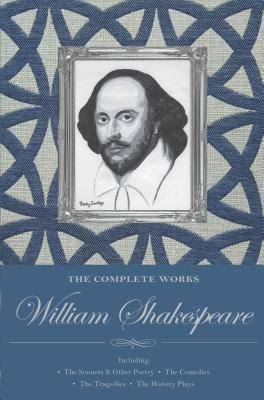
Description
All the plays and poems of William Shakespeare.
| Length | Emails required |
|---|---|
| 7,725 lines | 194 (based on one per day) |
Preview - part 126 of 194
Enter HERMIA
HERMIA. Never so weary, never so in woe, Bedabbled with the dew, and torn with briers, I can no further crawl, no further go; My legs can keep no pace with my desires. Here will I rest me till the break of day. Heavens shield Lysander, if they mean a fray! [Lies down and sleeps] PUCK. On the ground Sleep sound; I'll apply To your eye, Gentle lover, remedy. [Squeezing the juice on LYSANDER'S eyes] When thou wak'st, Thou tak'st True delight In the sight Of thy former lady's eye; And the country proverb known, That every man should take his own, In your waking shall be shown: Jack shall have Jill; Nought shall go ill; The man shall have his mare again, and all shall be well. Exit
<>
ACT IV. SCENE I. The wood. LYSANDER, DEMETRIUS, HELENA, and HERMIA, lying asleep
Enter TITANIA and Bottom; PEASEBLOSSOM, COBWEB, MOTH, MUSTARDSEED, and other FAIRIES attending; OBERON behind, unseen
TITANIA. Come, sit thee down upon this flow'ry bed, While I thy amiable cheeks do coy, And stick musk-roses in thy sleek smooth head, And kiss thy fair large ears, my gentle joy. BOTTOM. Where's Peaseblossom? PEASEBLOSSOM. Ready. BOTTOM. Scratch my head, Peaseblossom. Where's Mounsieur Cobweb? COBWEB. Ready. BOTTOM. Mounsieur Cobweb; good mounsieur, get you your weapons in your hand and kill me a red-hipp'd humble-bee on the top of a thistle; and, good mounsieur, bring me the honey-bag. Do not fret yourself too much in the action, mounsieur; and, good mounsieur, have a care the honey-bag break not; I would be loath to have you overflown with a honey-bag, signior. Where's Mounsieur Mustardseed? MUSTARDSEED. Ready. BOTTOM. Give me your neaf, Mounsieur Mustardseed. Pray you, leave your curtsy, good mounsieur. MUSTARDSEED. What's your will? BOTTOM. Nothing, good mounsieur, but to help Cavalery Cobweb to scratch. I must to the barber's, mounsieur; for methinks I am marvellous hairy about the face; and I am such a tender ass, if my hair do but tickle me I must scratch. TITANIA. What, wilt thou hear some music, my sweet love? BOTTOM. I have a reasonable good ear in music. Let's have the tongs and the bones. TITANIA. Or say, sweet love, what thou desirest to eat. BOTTOM. Truly, a peck of provender; I could munch your good dry oats. Methinks I have a great desire to a bottle of hay. Good hay, sweet hay, hath no fellow. TITANIA. I have a venturous fairy that shall seek The squirrel's hoard, and fetch thee new nuts. BOTTOM. I had rather have a handful or two of dried peas. But, I pray you, let none of your people stir me; I have an exposition of sleep come upon me. TITANIA. Sleep thou, and I will wind thee in my arms. Fairies, be gone, and be all ways away. Exeunt FAIRIES So doth the woodbine the sweet honeysuckle Gently entwist; the female ivy so Enrings the barky fingers of the elm. O, how I love thee! how I dote on thee! [They sleep]
Enter PUCK
OBERON. [Advancing] Welcome, good Robin. Seest thou this sweet sight? Her dotage now I do begin to pity; For, meeting her of late behind the wood, Seeking sweet favours for this hateful fool, I did upbraid her and fall out with her. For she his hairy temples then had rounded With coronet of fresh and fragrant flowers; And that same dew which sometime on the buds Was wont to swell like round and orient pearls Stood now within the pretty flowerets' eyes, Like tears that did their own disgrace bewail. When I had at my pleasure taunted her, And she in mild terms begg'd my patience, I then did ask of her her changeling child; Which straight she gave me, and her fairy sent To bear him to my bower in fairy land. And now I have the boy, I will undo This hateful imperfection of her eyes. And, gentle Puck, take this transformed scalp From off the head of this Athenian swain, That he awaking when the other do May all to Athens back again repair, And think no more of this night's accidents But as the fierce vexation of a dream. But first I will release the Fairy Queen. [Touching her eyes] Be as thou wast wont to be; See as thou was wont to see. Dian's bud o'er Cupid's flower Hath such force and blessed power. Now, my Titania; wake you, my sweet queen. TITANIA. My Oberon! What visions have I seen! Methought I was enamour'd of an ass. OBERON. There lies your love. TITANIA. How came these things to pass? O, how mine eyes do loathe his visage now! OBERON. Silence awhile. Robin, take off this head. Titania, music call; and strike more dead Than common sleep of all these five the sense. TITANIA. Music, ho, music, such as charmeth sleep! PUCK. Now when thou wak'st with thine own fool's eyes peep. OBERON. Sound, music. Come, my Queen, take hands with me, [Music] And rock the ground whereon these sleepers be. Now thou and I are new in amity, And will to-morrow midnight solemnly Dance in Duke Theseus' house triumphantly, And bless it to all fair prosperity. There shall the pairs of faithful lovers be Wedded, with Theseus, an in jollity. PUCK. Fairy King, attend and mark; I do hear the morning lark. OBERON. Then, my Queen, in silence sad, Trip we after night's shade. We the globe can compass soon, Swifter than the wand'ring moon. TITANIA. Come, my lord; and in our flight, Tell me how it came this night That I sleeping here was found With these mortals on the ground. Exeunt
To the winding of horns, enter THESEUS, HIPPOLYTA, EGEUS, and train
THESEUS. Go, one of you, find out the forester; For now our observation is perform'd, And since we have the vaward of the day, My love shall hear the music of my hounds. Uncouple in the western valley; let them go. Dispatch, I say, and find the forester. Exit an ATTENDANT We will, fair Queen, up to the mountain's top, And mark the musical confusion Of hounds and echo in conjunction. HIPPOLYTA. I was with Hercules and Cadmus once When in a wood of Crete they bay'd the bear With hounds of Sparta; never did I hear Such gallant chiding, for, besides the groves, The skies, the fountains, every region near Seem'd all one mutual cry. I never heard So musical a discord, such sweet thunder. THESEUS. My hounds are bred out of the Spartan kind, So flew'd, so sanded; and their heads are hung With ears that sweep away the morning dew; Crook-knee'd and dew-lapp'd like Thessalian bulls; Slow in pursuit, but match'd in mouth like bells, Each under each. A cry more tuneable Was never holla'd to, nor cheer'd with horn, In Crete, in Sparta, nor in Thessaly. Judge when you hear. But, soft, what nymphs are these? EGEUS. My lord, this is my daughter here asleep, And this Lysander, this Demetrius is, This Helena, old Nedar's Helena. I wonder of their being here together. THESEUS. No doubt they rose up early to observe The rite of May; and, hearing our intent, Came here in grace of our solemnity. But speak, Egeus; is not this the day That Hermia should give answer of her choice? EGEUS. It is, my lord. THESEUS. Go, bid the huntsmen wake them with their horns. [Horns and shout within. The sleepers awake and kneel to THESEUS] Good-morrow, friends. Saint Valentine is past; Begin these wood-birds but to couple now? LYSANDER. Pardon, my lord. THESEUS. I pray you all, stand up. I know you two are rival enemies; How comes this gentle concord in the world That hatred is so far from jealousy To sleep by hate, and fear no enmity? LYSANDER. My lord, I shall reply amazedly, Half sleep, half waking; but as yet, I swear, I cannot truly say how I came here, But, as I think- for truly would I speak, And now I do bethink me, so it is- I came with Hermia hither. Our intent Was to be gone from Athens, where we might, Without the peril of the Athenian law- EGEUS. Enough, enough, my Lord; you have enough; I beg the law, the law upon his head. They would have stol'n away, they would, Demetrius, Thereby to have defeated you and me: You of your wife, and me of my consent, Of my consent that she should be your wife. DEMETRIUS. My lord, fair Helen told me of their stealth, Of this their purpose hither to this wood; And I in fury hither followed them, Fair Helena in fancy following me. But, my good lord, I wot not by what power- But by some power it is- my love to Hermia, Melted as the snow, seems to me now As the remembrance of an idle gaud Which in my childhood I did dote upon; And all the faith, the virtue of my heart, The object and the pleasure of mine eye, Is only Helena. To her, my lord, Was I betroth'd ere I saw Hermia. But, like a sickness, did I loathe this food; But, as in health, come to my natural taste, Now I do wish it, love it, long for it, And will for evermore be true to it. THESEUS. Fair lovers, you are fortunately met; Of this discourse we more will hear anon. Egeus, I will overbear your will; For in the temple, by and by, with us These couples shall eternally be knit. And, for the morning now is something worn, Our purpos'd hunting shall be set aside. Away with us to Athens, three and three; We'll hold a feast in great solemnity. Come, Hippolyta. Exeunt THESEUS, HIPPOLYTA, EGEUS, and train DEMETRIUS. These things seem small and undistinguishable, Like far-off mountains turned into clouds. HERMIA. Methinks I see these things with parted eye, When every thing seems double. HELENA. So methinks; And I have found Demetrius like a jewel, Mine own, and not mine own. DEMETRIUS. Are you sure That we are awake? It seems to me That yet we sleep, we dream. Do not you think The Duke was here, and bid us follow him? HERMIA. Yea, and my father. HELENA. And Hippolyta. LYSANDER. And he did bid us follow to the temple. DEMETRIUS. Why, then, we are awake; let's follow him; And by the way let us recount our dreams. Exeunt BOTTOM. [Awaking] When my cue comes, call me, and I will answer. My next is 'Most fair Pyramus.' Heigh-ho! Peter Quince! Flute, the bellows-mender! Snout, the tinker! Starveling! God's my life, stol'n hence, and left me asleep! I have had a most rare vision. I have had a dream, past the wit of man to say what dream it was. Man is but an ass if he go about to expound this dream. Methought I was- there is no man can tell what. Methought I was, and methought I had, but man is but a patch'd fool, if he will offer to say what methought I had. The eye of man hath not heard, the ear of man hath not seen, man's hand is not able to taste, his tongue to conceive, nor his heart to report, what my dream was. I will get Peter Quince to write a ballad of this dream. It shall be call'd 'Bottom's Dream,' because it hath no bottom; and I will sing it in the latter end of a play, before the Duke. Peradventure, to make it the more gracious, I shall sing it at her death. Exit
SCENE II. Athens. QUINCE'S house
Enter QUINCE, FLUTE, SNOUT, and STARVELING
QUINCE. Have you sent to Bottom's house? Is he come home yet? STARVELING. He cannot be heard of. Out of doubt he is transported. FLUTE. If he come not, then the play is marr'd; it goes not forward, doth it? QUINCE. It is not possible. You have not a man in all Athens able to discharge Pyramus but he. FLUTE. No; he hath simply the best wit of any handicraft man in Athens. QUINCE. Yea, and the best person too; and he is a very paramour for a sweet voice. FLUTE. You must say 'paragon.' A paramour is- God bless us!- A thing of naught.
Enter SNUG
SNUG. Masters, the Duke is coming from the temple; and there is two or three lords and ladies more married. If our sport had gone forward, we had all been made men. FLUTE. O sweet bully Bottom! Thus hath he lost sixpence a day during his life; he could not have scaped sixpence a day. An the Duke had not given him sixpence a day for playing Pyramus, I'll be hanged. He would have deserved it: sixpence a day in Pyramus, or nothing.
Enter BOTTOM
BOTTOM. Where are these lads? Where are these hearts? QUINCE. Bottom! O most courageous day! O most happy hour! BOTTOM. Masters, I am to discourse wonders; but ask me not what; for if I tell you, I am not true Athenian. I will tell you everything, right as it fell out. QUINCE. Let us hear, sweet Bottom. BOTTOM. Not a word of me. All that I will tell you is, that the Duke hath dined. Get your apparel together; good strings to your beards, new ribbons to your pumps; meet presently at the palace; every man look o'er his part; for the short and the long is, our play is preferr'd. In any case, let Thisby have clean linen; and let not him that plays the lion pare his nails, for they shall hang out for the lion's claws. And, most dear actors, eat no onions nor garlic, for we are to utter sweet breath; and I do not doubt but to hear them say it is a sweet comedy. No more words. Away, go, away! Exeunt
<>
ACT V. SCENE I. Athens. The palace of THESEUS
Enter THESEUS, HIPPOLYTA, PHILOSTRATE, LORDS, and ATTENDANTS
HIPPOLYTA. 'Tis strange, my Theseus, that these lovers speak of. THESEUS. More strange than true. I never may believe These antique fables, nor these fairy toys. Lovers and madmen have such seething brains, Such shaping fantasies, that apprehend More than cool reason ever comprehends. The lunatic, the lover, and the poet, Are of imagination all compact. One sees more devils than vast hell can hold; That is the madman. The lover, all as frantic, Sees Helen's beauty in a brow of Egypt. The poet's eye, in a fine frenzy rolling, Doth glance from heaven to earth, from earth to heaven; And as imagination bodies forth The forms of things unknown, the poet's pen Turns them to shapes, and gives to airy nothing A local habitation and a name. Such tricks hath strong imagination That, if it would but apprehend some joy, It comprehends some bringer of that joy; Or in the night, imagining some fear, How easy is a bush suppos'd a bear? HIPPOLYTA. But all the story of the night told over, And all their minds transfigur'd so together, More witnesseth than fancy's images, And grows to something of great constancy, But howsoever strange and admirable.
Enter LYSANDER, DEMETRIUS, HERMIA, and HELENA
THESEUS. Here come the lovers, full of joy and mirth. Joy, gentle friends, joy and fresh days of love Accompany your hearts! LYSANDER. More than to us Wait in your royal walks, your board, your bed! THESEUS. Come now; what masques, what dances shall we have, To wear away this long age of three hours Between our after-supper and bed-time? Where is our usual manager of mirth? What revels are in hand? Is there no play To ease the anguish of a torturing hour? Call Philostrate. PHILOSTRATE. Here, mighty Theseus. THESEUS. Say, what abridgment have you for this evening? What masque? what music? How shall we beguile The lazy time, if not with some delight? PHILOSTRATE. There is a brief how many sports are ripe; Make choice of which your Highness will see first. [Giving a paper] THESEUS. 'The battle with the Centaurs, to be sung By an Athenian eunuch to the harp.' We'll none of that: that have I told my love, In glory of my kinsman Hercules. 'The riot of the tipsy Bacchanals, Tearing the Thracian singer in their rage.' That is an old device, and it was play'd When I from Thebes came last a conqueror. 'The thrice three Muses mourning for the death Of Learning, late deceas'd in beggary.' That is some satire, keen and critical, Not sorting with a nuptial ceremony. 'A tedious brief scene of young Pyramus And his love Thisby; very tragical mirth.' Merry and tragical! tedious and brief! That is hot ice and wondrous strange snow. How shall we find the concord of this discord? PHILOSTRATE. A play there is, my lord, some ten words long, Which is as brief as I have known a play; But by ten words, my lord, it is too long, Which makes it tedious; for in all the play There is not one word apt, one player fitted. And tragical, my noble lord, it is; For Pyramus therein doth kill himself. Which when I saw rehears'd, I must confess, Made mine eyes water; but more merry tears The passion of loud laughter never shed. THESEUS. What are they that do play it? PHILOSTRATE. Hard-handed men that work in Athens here, Which never labour'd in their minds till now; And now have toil'd their unbreathed memories With this same play against your nuptial. THESEUS. And we will hear it. PHILOSTRATE. No, my noble lord, It is not for you. I have heard it over, And it is nothing, nothing in the world; Unless you can find sport in their intents, Extremely stretch'd and conn'd with cruel pain, To do you service. THESEUS. I will hear that play; For never anything can be amiss When simpleness and duty tender it. Go, bring them in; and take your places, ladies. Exit PHILOSTRATE HIPPOLYTA. I love not to see wretchedness o'er-charged, And duty in his service perishing. THESEUS. Why, gentle sweet, you shall see no such thing. HIPPOLYTA. He says they can do nothing in this kind. THESEUS. The kinder we, to give them thanks for nothing. Our sport shall be to take what they mistake; And what poor duty cannot do, noble respect Takes it in might, not merit. Where I have come, great clerks have purposed To greet me with premeditated welcomes; Where I have seen them shiver and look pale, Make periods in the midst of sentences, Throttle their practis'd accent in their fears, And, in conclusion, dumbly have broke off, Not paying me a welcome. Trust me, sweet, Out of this silence yet I pick'd a welcome; And in the modesty of fearful duty I read as much as from the rattling tongue Of saucy and audacious eloquence. Love, therefore, and tongue-tied simplicity In least speak most to my capacity.
Re-enter PHILOSTRATE
PHILOSTRATE. SO please your Grace, the Prologue is address'd. THESEUS. Let him approach. [Flourish of trumpets]
Enter QUINCE as the PROLOGUE
PROLOGUE. If we offend, it is with our good will. That you should think, we come not to offend, But with good will. To show our simple skill, That is the true beginning of our end. Consider then, we come but in despite. We do not come, as minding to content you, Our true intent is. All for your delight We are not here. That you should here repent you, The actors are at band; and, by their show, You shall know all, that you are like to know, THESEUS. This fellow doth not stand upon points. LYSANDER. He hath rid his prologue like a rough colt; he knows not the stop. A good moral, my lord: it is not enough to speak, but to speak true. HIPPOLYTA. Indeed he hath play'd on this prologue like a child on a recorder- a sound, but not in government. THESEUS. His speech was like a tangled chain; nothing im paired, but all disordered. Who is next?
Enter, with a trumpet before them, as in dumb show, PYRAMUS and THISBY, WALL, MOONSHINE, and LION
PROLOGUE. Gentles, perchance you wonder at this show; But wonder on, till truth make all things plain. This man is Pyramus, if you would know; This beauteous lady Thisby is certain. This man, with lime and rough-cast, doth present Wall, that vile Wall which did these lovers sunder; And through Walls chink, poor souls, they are content To whisper. At the which let no man wonder. This man, with lanthorn, dog, and bush of thorn, Presenteth Moonshine; for, if you will know, By moonshine did these lovers think no scorn To meet at Ninus' tomb, there, there to woo. This grisly beast, which Lion hight by name, The trusty Thisby, coming first by night, Did scare away, or rather did affright; And as she fled, her mantle she did fall; Which Lion vile with bloody mouth did stain. Anon comes Pyramus, sweet youth and tall, And finds his trusty Thisby's mantle slain; Whereat with blade, with bloody blameful blade, He bravely broach'd his boiling bloody breast; And Thisby, tarrying in mulberry shade, His dagger drew, and died. For all the rest, Let Lion, Moonshine, Wall, and lovers twain, At large discourse while here they do remain. Exeunt PROLOGUE, PYRAMUS, THISBY, LION, and MOONSHINE THESEUS. I wonder if the lion be to speak. DEMETRIUS. No wonder, my lord: one lion may, when many asses do. WALL. In this same interlude it doth befall That I, one Snout by name, present a wall; And such a wall as I would have you think That had in it a crannied hole or chink, Through which the lovers, Pyramus and Thisby, Did whisper often very secretly. This loam, this rough-cast, and this stone, doth show That I am that same wall; the truth is so; And this the cranny is, right and sinister, Through which the fearful lovers are to whisper. THESEUS. Would you desire lime and hair to speak better? DEMETRIUS. It is the wittiest partition that ever I heard discourse, my lord.
Enter PYRAMUS
THESEUS. Pyramus draws near the wall; silence. PYRAMUS. O grim-look'd night! O night with hue so black! O night, which ever art when day is not! O night, O night, alack, alack, alack, I fear my Thisby's promise is forgot! And thou, O wall, O sweet, O lovely wall, That stand'st between her father's ground and mine; Thou wall, O wall, O sweet and lovely wall, Show me thy chink, to blink through with mine eyne. [WALL holds up his fingers] Thanks, courteous wall. Jove shield thee well for this! But what see what see I? No Thisby do I see. O wicked wall, through whom I see no bliss, Curs'd he thy stones for thus deceiving me! THESEUS. The wall, methinks, being sensible, should curse again. PYRAMUS. No, in truth, sir, he should not. Deceiving me is Thisby's cue. She is to enter now, and I am to spy her through the wall. You shall see it will fall pat as I told you; yonder she comes.
Enter THISBY
THISBY. O wall, full often hast thou beard my moans, For parting my fair Pyramus and me! My cherry lips have often kiss'd thy stones, Thy stones with lime and hair knit up in thee. PYRAMUS. I see a voice; now will I to the chink, To spy an I can hear my Thisby's face. Thisby! THISBY. My love! thou art my love, I think. PYRAMUS. Think what thou wilt, I am thy lover's grace; And like Limander am I trusty still. THISBY. And I like Helen, till the Fates me kill. PYRAMUS. Not Shafalus to Procrus was so true. THISBY. As Shafalus to Procrus, I to you. PYRAMUS. O, kiss me through the hole of this vile wall. THISBY. I kiss the wall's hole, not your lips at all. PYRAMUS. Wilt thou at Ninny's tomb meet me straightway? THISBY. Tide life, tide death, I come without delay. Exeunt PYRAMUS and THISBY WALL. Thus have I, Wall, my part discharged so; And, being done, thus Wall away doth go. Exit WALL THESEUS. Now is the moon used between the two neighbours. DEMETRIUS. No remedy, my lord, when walls are so wilful to hear without warning. HIPPOLYTA. This is the silliest stuff that ever I heard. THESEUS. The best in this kind are but shadows; and the worst are no worse, if imagination amend them. HIPPOLYTA. It must be your imagination then, and not theirs. THESEUS. If we imagine no worse of them than they of themselves, they may pass for excellent men. Here come two noble beasts in, a man and a lion.
Enter LION and MOONSHINE
LION. You, ladies, you, whose gentle hearts do fear The smallest monstrous mouse that creeps on floor, May now, perchance, both quake and tremble here, When lion rough in wildest rage doth roar. Then know that I as Snug the joiner am A lion fell, nor else no lion's dam; For, if I should as lion come in strife Into this place, 'twere pity on my life. THESEUS. A very gentle beast, and of a good conscience. DEMETRIUS. The very best at a beast, my lord, that e'er I saw. LYSANDER. This lion is a very fox for his valour. THESEUS. True; and a goose for his discretion. DEMETRIUS. Not so, my lord; for his valour cannot carry his discretion, and the fox carries the goose. THESEUS. His discretion, I am sure, cannot carry his valour; for the goose carries not the fox. It is well. Leave it to his discretion, and let us listen to the Moon. MOONSHINE. This lanthorn doth the horned moon present- DEMETRIUS. He should have worn the horns on his head. THESEUS. He is no crescent, and his horns are invisible within the circumference. MOONSHINE. This lanthorn doth the horned moon present; Myself the Man i' th' Moon do seem to be. THESEUS. This is the greatest error of all the rest; the man should be put into the lantern. How is it else the man i' th' moon? DEMETRIUS. He dares not come there for the candle; for, you see, it is already in snuff. HIPPOLYTA. I am aweary of this moon. Would he would change! THESEUS. It appears, by his small light of discretion, that he is in the wane; but yet, in courtesy, in all reason, we must stay the time. LYSANDER. Proceed, Moon. MOON. All that I have to say is to tell you that the lanthorn is the moon; I, the Man i' th' Moon; this thorn-bush, my thorn-bush; and this dog, my dog. DEMETRIUS. Why, all these should be in the lantern; for all these are in the moon. But silence; here comes Thisby.