The Complete Works
William Shakespeare
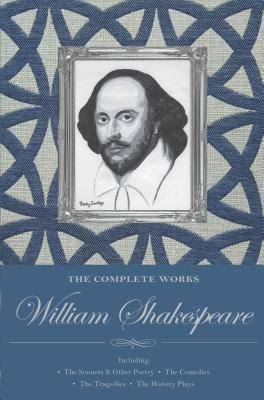
Description
All the plays and poems of William Shakespeare.
| Length | Emails required |
|---|---|
| 7,725 lines | 194 (based on one per day) |
Preview - part 122 of 194
HOST. What wouldst thou have, boor? What, thick-skin? Speak, breathe, discuss; brief, short, quick, snap. SIMPLE. Marry, sir, I come to speak with Sir John Falstaff from Master Slender. HOST. There's his chamber, his house, his castle, his standing-bed and truckle-bed; 'tis painted about with the story of the Prodigal, fresh and new. Go, knock and can; he'll speak like an Anthropophaginian unto thee. Knock, I say. SIMPLE. There's an old woman, a fat woman, gone up into his chamber; I'll be so bold as stay, sir, till she come down; I come to speak with her, indeed. HOST. Ha! a fat woman? The knight may be robb'd. I'll call. Bully knight! Bully Sir John! Speak from thy lungs military. Art thou there? It is thine host, thine Ephesian, calls. FALSTAFF. [Above] How now, mine host? HOST. Here's a Bohemian-Tartar tarries the coming down of thy fat woman. Let her descend, bully, let her descend; my chambers are honourible. Fie, privacy, fie!
Enter FALSTAFF
FALSTAFF. There was, mine host, an old fat woman even now with, me; but she's gone. SIMPLE. Pray you, sir, was't not the wise woman of Brainford? FALSTAFF. Ay, marry was it, mussel-shell. What would you with her? SIMPLE. My master, sir, my Master Slender, sent to her, seeing her go thorough the streets, to know, sir, whether one Nym, sir, that beguil'd him of a chain, had the chain or no. FALSTAFF. I spake with the old woman about it. SIMPLE. And what says she, I pray, sir? FALSTAFF Marry, she says that the very same man that beguil'd Master Slender of his chain cozen'd him of it. SIMPLE. I would I could have spoken with the woman herself; I had other things to have spoken with her too, from him. FALSTAFF. What are they? Let us know. HOST. Ay, come; quick. SIMPLE. I may not conceal them, sir. FALSTAFF. Conceal them, or thou diest. SIMPLE.. Why, sir, they were nothing but about Mistress Anne Page: to know if it were my master's fortune to have her or no. FALSTAFF. 'Tis, 'tis his fortune. SIMPLE. What sir? FALSTAFF. To have her, or no. Go; say the woman told me so. SIMPLE. May I be bold to say so, sir? FALSTAFF. Ay, sir, like who more bold? SIMPLE., I thank your worship; I shall make my master glad with these tidings. Exit SIMPLE HOST. Thou art clerkly, thou art clerkly, Sir John. Was there a wise woman with thee? FALSTAFF. Ay, that there was, mine host; one that hath taught me more wit than ever I learn'd before in my life; and I paid nothing for it neither, but was paid for my learning.
Enter BARDOLPH
BARDOLPH. Out, alas, sir, cozenage, mere cozenage! HOST. Where be my horses? Speak well of them, varletto. BARDOLPH. Run away with the cozeners; for so soon as I came beyond Eton, they threw me off from behind one of them, in a slough of mire; and set spurs and away, like three German devils, three Doctor Faustuses. HOST. They are gone but to meet the Duke, villain; do not say they be fled. Germans are honest men.
Enter SIR HUGH EVANS
EVANS. Where is mine host? HOST. What is the matter, sir? EVANS. Have a care of your entertainments. There is a friend of mine come to town tells me there is three cozen-germans that has cozen'd all the hosts of Readins, of Maidenhead, of Colebrook, of horses and money. I tell you for good will, look you; you are wise, and full of gibes and vlouting-stogs, and 'tis not convenient you should be cozened. Fare you well. Exit
Enter DOCTOR CAIUS
CAIUS. Vere is mine host de Jarteer? HOST. Here, Master Doctor, in perplexity and doubtful dilemma. CAIUS. I cannot tell vat is dat; but it is tell-a me dat you make grand preparation for a Duke de Jamany. By my trot, dere is no duke that the court is know to come; I tell you for good will. Adieu. Exit HOST. Hue and cry, villain, go! Assist me, knight; I am undone. Fly, run, hue and cry, villain; I am undone. Exeunt HOST and BARDOLPH FALSTAFF. I would all the world might be cozen'd, for I have been cozen'd and beaten too. If it should come to the car of the court how I have been transformed, and how my transformation hath been wash'd and cudgell'd, they would melt me out of my fat, drop by drop, and liquor fishermen's boots with me; I warrant they would whip me with their fine wits till I were as crestfall'n as a dried pear. I never prosper'd since I forswore myself at primero. Well, if my wind were but long enough to say my prayers, would repent.
Enter MISTRESS QUICKLY
Now! whence come you? QUICKLY. From the two parties, forsooth. FALSTAFF. The devil take one party and his dam the other! And so they shall be both bestowed. I have suffer'd more for their sakes, more than the villainous inconstancy of man's disposition is able to bear. QUICKLY. And have not they suffer'd? Yes, I warrant; speciously one of them; Mistress Ford, good heart, is beaten black and blue, that you cannot see a white spot about her. FALSTAFF. What tell'st thou me of black and blue? I was beaten myself into all the colours of the rainbow; and was like to be apprehended for the witch of Brainford. But that my admirable dexterity of wit, my counterfeiting the action of an old woman, deliver'd me, the knave constable had set me i' th' stocks, i' th' common stocks, for a witch. QUICKLY. Sir, let me speak with you in your chamber; you shall hear how things go, and, I warrant, to your content. Here is a letter will say somewhat. Good hearts, what ado here is to bring you together! Sure, one of you does not serve heaven well, that you are so cross'd. FALSTAFF. Come up into my chamber. Exeunt
SCENE 6.
The Garter Inn
Enter FENTON and HOST
HOST. Master Fenton, talk not to me; my mind is heavy; I will give over all. FENTON. Yet hear me speak. Assist me in my purpose, And, as I am a gentleman, I'll give the A hundred pound in gold more than your loss. HOST. I will hear you, Master Fenton; and I will, at the least, keep your counsel. FENTON. From time to time I have acquainted you With the dear love I bear to fair Anne Page; Who, mutually, hath answer'd my affection, So far forth as herself might be her chooser, Even to my wish. I have a letter from her Of such contents as you will wonder at; The mirth whereof so larded with my matter That neither, singly, can be manifested Without the show of both. Fat Falstaff Hath a great scene. The image of the jest I'll show you here at large. Hark, good mine host: To-night at Heme's oak, just 'twixt twelve and one, Must my sweet Nan present the Fairy Queen- The purpose why is here-in which disguise, While other jests are something rank on foot, Her father hath commanded her to slip Away with Slender, and with him at Eton Immediately to marry; she hath consented. Now, sir, Her mother, even strong against that match And firm for Doctor Caius, hath appointed That he shall likewise shuffle her away While other sports are tasking of their minds, And at the dean'ry, where a priest attends, Straight marry her. To this her mother's plot She seemingly obedient likewise hath Made promise to the doctor. Now thus it rests: Her father means she shall be all in white; And in that habit, when Slender sees his time To take her by the hand and bid her go, She shall go with him; her mother hath intended The better to denote her to the doctor- For they must all be mask'd and vizarded- That quaint in green she shall be loose enrob'd, With ribands pendent, flaring 'bout her head; And when the doctor spies his vantage ripe, To pinch her by the hand, and, on that token, The maid hath given consent to go with him. HOST. Which means she to deceive, father or mother? FENTON. Both, my good host, to go along with me. And here it rests-that you'll procure the vicar To stay for me at church, 'twixt twelve and one, And in the lawful name of marrying, To give our hearts united ceremony. HOST. Well, husband your device; I'll to the vicar. Bring you the maid, you shall not lack a priest. FENTON. So shall I evermore be bound to thee; Besides, I'll make a present recompense. Exeunt
<>
ACT V. SCENE 1.
The Garter Inn
Enter FALSTAFF and MISTRESS QUICKLY
FALSTAFF. Prithee, no more prattling; go. I'll, hold. This is the third time; I hope good luck lies in odd numbers. Away, go; they say there is divinity in odd numbers, either in nativity, chance, or death. Away. QUICKLY. I'll provide you a chain, and I'll do what I can to get you a pair of horns. FALSTAFF. Away, I say; time wears; hold up your head, and mince. Exit MRS. QUICKLY
Enter FORD disguised
How now, Master Brook. Master Brook, the matter will be known tonight or never. Be you in the Park about midnight, at Herne's oak, and you shall see wonders. FORD. Went you not to her yesterday, sir, as you told me you had appointed? FALSTAFF. I went to her, Master Brook, as you see, like a poor old man; but I came from her, Master Brook, like a poor old woman. That same knave Ford, her husband, hath the finest mad devil of jealousy in him, Master Brook, that ever govern'd frenzy. I will tell you-he beat me grievously in the shape of a woman; for in the shape of man, Master Brook, I fear not Goliath with a weaver's beam; because I know also life is a shuttle. I am in haste; go along with me; I'll. tell you all, Master Brook. Since I pluck'd geese, play'd truant, and whipp'd top, I knew not what 'twas to be beaten till lately. Follow me. I'll tell you strange things of this knave-Ford, on whom to-night I will be revenged, and I will deliver his wife into your hand. Follow. Strange things in hand, Master Brook! Follow. Exeunt
SCENE 2.
Windsor Park
Enter PAGE, SHALLOW, and SLENDER
PAGE. Come, come; we'll couch i' th' Castle ditch till we see the light of our fairies. Remember, son Slender, my daughter. SLENDER. Ay, forsooth; I have spoke with her, and we have a nay-word how to know one another. I come to her in white and cry 'mum'; she cries 'budget,' and by that we know one another. SHALLOW. That's good too; but what needs either your mum or her budget? The white will decipher her well enough. It hath struck ten o'clock. PAGE. The night is dark; light and spirits will become it well. Heaven prosper our sport! No man means evil but the devil, and we shall know him by his horns. Let's away; follow me. Exeunt
SCENE 3.
A street leading to the Park
Enter MISTRESS PAGE, MISTRESS FORD, and DOCTOR CAIUS
MRS. PAGE. Master Doctor, my daughter is in green; when you see your time, take her by the hand, away with her to the deanery, and dispatch it quickly. Go before into the Park; we two must go together. CAIUS. I know vat I have to do; adieu. MRS. PAGE. Fare you well, sir. [Exit CAIUS] My husband will not rejoice so much at the abuse of Falstaff as he will chafe at the doctor's marrying my daughter; but 'tis no matter; better a little chiding than a great deal of heartbreak. MRS. FORD. Where is Nan now, and her troop of fairies, and the Welsh devil, Hugh? MRS. PAGE. They are all couch'd in a pit hard by Heme's oak, with obscur'd lights; which, at the very instant of Falstaff's and our meeting, they will at once display to the night. MRS. FORD. That cannot choose but amaze him. MRS. PAGE. If he be not amaz'd, he will be mock'd; if he be amaz'd, he will every way be mock'd. MRS. FORD. We'll betray him finely. MRS. PAGE. Against such lewdsters and their lechery, Those that betray them do no treachery. MRS. FORD. The hour draws on. To the oak, to the oak! Exeunt
SCENE 4.
Windsor Park
Enter SIR HUGH EVANS like a satyr, with OTHERS as fairies
EVANS. Trib, trib, fairies; come; and remember your parts. Be pold, I pray you; follow me into the pit; and when I give the watch-ords, do as I pid you. Come, come; trib, trib. Exeunt