The Complete Works
William Shakespeare
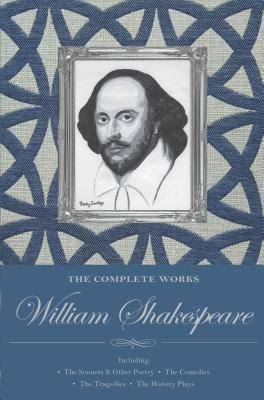
Description
All the plays and poems of William Shakespeare.
| Length | Emails required |
|---|---|
| 7,725 lines | 194 (based on one per day) |
Preview - part 118 of 194
SCENE 3.
The Garter Inn
Enter FALSTAFF, HOST, BARDOLPH, NYM, PISTOL, and ROBIN
FALSTAFF. Mine host of the Garter! HOST. What says my bully rook? Speak scholarly and wisely. FALSTAFF. Truly, mine host, I must turn away some of my followers. HOST. Discard, bully Hercules; cashier; let them wag; trot, trot. FALSTAFF. I sit at ten pounds a week. HOST. Thou'rt an emperor-Caesar, Keiser, and Pheazar. I will entertain Bardolph; he shall draw, he shall tap; said I well, bully Hector? FALSTAFF. Do so, good mine host. HOST. I have spoke; let him follow. [To BARDOLPH] Let me see thee froth and lime. I am at a word; follow. Exit HOST FALSTAFF. Bardolph, follow him. A tapster is a good trade; an old cloak makes a new jerkin; a wither'd serving-man a fresh tapster. Go; adieu. BARDOLPH. It is a life that I have desir'd; I will thrive. PISTOL. O base Hungarian wight! Wilt thou the spigot wield? Exit BARDOLPH NYM. He was gotten in drink. Is not the humour conceited? FALSTAFF. I am glad I am so acquit of this tinder-box: his thefts were too open; his filching was like an unskilful singer-he kept not time. NYM. The good humour is to steal at a minute's rest. PISTOL. 'Convey' the wise it call. 'Steal' foh! A fico for the phrase! FALSTAFF. Well, sirs, I am almost out at heels. PISTOL. Why, then, let kibes ensue. FALSTAFF. There is no remedy; I must cony-catch; I must shift. PISTOL. Young ravens must have food. FALSTAFF. Which of you know Ford of this town? PISTOL. I ken the wight; he is of substance good. FALSTAFF. My honest lads, I will tell you what I am about. PISTOL. Two yards, and more. FALSTAFF. No quips now, Pistol. Indeed, I am in the waist two yards about; but I am now about no waste; I am about thrift. Briefly, I do mean to make love to Ford's wife; I spy entertainment in her; she discourses, she carves, she gives the leer of invitation; I can construe the action of her familiar style; and the hardest voice of her behaviour, to be English'd rightly, is 'I am Sir John Falstaff's.' PISTOL. He hath studied her well, and translated her will out of honesty into English. NYM. The anchor is deep; will that humour pass? FALSTAFF. Now, the report goes she has all the rule of her husband's purse; he hath a legion of angels. PISTOL. As many devils entertain; and 'To her, boy,' say I. NYM. The humour rises; it is good; humour me the angels. FALSTAFF. I have writ me here a letter to her; and here another to Page's wife, who even now gave me good eyes too, examin'd my parts with most judicious oeillades; sometimes the beam of her view gilded my foot, sometimes my portly belly. PISTOL. Then did the sun on dunghill shine. NYM. I thank thee for that humour. FALSTAFF. O, she did so course o'er my exteriors with such a greedy intention that the appetite of her eye did seem to scorch me up like a burning-glass! Here's another letter to her. She bears the purse too; she is a region in Guiana, all gold and bounty. I will be cheaters to them both, and they shall be exchequers to me; they shall be my East and West Indies, and I will trade to them both. Go, bear thou this letter to Mistress Page; and thou this to Mistress Ford. We will thrive, lads, we will thrive. PISTOL. Shall I Sir Pandarus of Troy become, And by my side wear steel? Then Lucifer take all! NYM. I will run no base humour. Here, take the humour-letter; I will keep the haviour of reputation. FALSTAFF. [To ROBIN] Hold, sirrah; bear you these letters tightly; Sail like my pinnace to these golden shores. Rogues, hence, avaunt! vanish like hailstones, go; Trudge, plod away i' th' hoof; seek shelter, pack! Falstaff will learn the humour of the age; French thrift, you rogues; myself, and skirted page. Exeunt FALSTAFF and ROBIN PISTOL. Let vultures gripe thy guts! for gourd and fullam holds, And high and low beguiles the rich and poor; Tester I'll have in pouch when thou shalt lack, Base Phrygian Turk! NYM. I have operations in my head which be humours of revenge. PISTOL. Wilt thou revenge? NYM. By welkin and her star! PISTOL. With wit or steel? NYM. With both the humours, I. I will discuss the humour of this love to Page. PISTOL. And I to Ford shall eke unfold How Falstaff, varlet vile, His dove will prove, his gold will hold, And his soft couch defile. NYM. My humour shall not cool; I will incense Page to deal with poison; I will possess him with yellowness; for the revolt of mine is dangerous. That is my true humour. PISTOL. Thou art the Mars of malcontents; I second thee; troop on. Exeunt
SCENE 4.
DOCTOR CAIUS'S house
Enter MISTRESS QUICKLY, SIMPLE, and RUGBY
QUICKLY. What, John Rugby! I pray thee go to the casement and see if you can see my master, Master Doctor Caius, coming. If he do, i' faith, and find anybody in the house, here will be an old abusing of God's patience and the King's English. RUGBY. I'll go watch. QUICKLY. Go; and we'll have a posset for't soon at night, in faith, at the latter end of a sea-coal fire. [Exit RUGBY] An honest, willing, kind fellow, as ever servant shall come in house withal; and, I warrant you, no tell-tale nor no breed-bate; his worst fault is that he is given to prayer; he is something peevish that way; but nobody but has his fault; but let that pass. Peter Simple you say your name is? SIMPLE. Ay, for fault of a better. QUICKLY. And Master Slender's your master? SIMPLE. Ay, forsooth. QUICKLY. Does he not wear a great round beard, like a glover's paring-knife? SIMPLE. No, forsooth; he hath but a little whey face, with a little yellow beard, a Cain-colour'd beard. QUICKLY. A softly-sprighted man, is he not? SIMPLE. Ay, forsooth; but he is as tall a man of his hands as any is between this and his head; he hath fought with a warrener. QUICKLY. How say you? O, I should remember him. Does he not hold up his head, as it were, and strut in his gait? SIMPLE. Yes, indeed, does he. QUICKLY. Well, heaven send Anne Page no worse fortune! Tell Master Parson Evans I will do what I can for your master. Anne is a good girl, and I wish-
Re-enter RUGBY
RUGBY. Out, alas! here comes my master. QUICKLY. We shall all be shent. Run in here, good young man; go into this closet. [Shuts SIMPLE in the closet] He will not stay long. What, John Rugby! John! what, John, I say! Go, John, go inquire for my master; I doubt he be not well that he comes not home. [Singing] And down, down, adown-a, etc.
Enter DOCTOR CAIUS
CAIUS. Vat is you sing? I do not like des toys. Pray you, go and vetch me in my closet un boitier vert-a box, a green-a box. Do intend vat I speak? A green-a box. QUICKLY. Ay, forsooth, I'll fetch it you. [Aside] I am glad he went not in himself; if he had found the young man, he would have been horn-mad. CAIUS. Fe, fe, fe fe! ma foi, il fait fort chaud. Je m'en vais a la cour-la grande affaire. QUICKLY. Is it this, sir? CAIUS. Oui; mette le au mon pocket: depeche, quickly. Vere is dat knave, Rugby? QUICKLY. What, John Rugby? John! RUGBY. Here, sir. CAIUS. You are John Rugby, and you are Jack Rugby. Come, take-a your rapier, and come after my heel to the court. RUGBY. 'Tis ready, sir, here in the porch. CAIUS. By my trot, I tarry too long. Od's me! Qu'ai j'oublie? Dere is some simples in my closet dat I vill not for the varld I shall leave behind. QUICKLY. Ay me, he'll find the young man there, and be mad! CAIUS. O diable, diable! vat is in my closet? Villainy! larron! [Pulling SIMPLE out] Rugby, my rapier! QUICKLY. Good master, be content. CAIUS. Wherefore shall I be content-a? QUICKLY. The young man is an honest man. CAIUS. What shall de honest man do in my closet? Dere is no honest man dat shall come in my closet. QUICKLY. I beseech you, be not so phlegmatic; hear the truth of it. He came of an errand to me from Parson Hugh. CAIUS. Vell? SIMPLE. Ay, forsooth, to desire her to- QUICKLY. Peace, I pray you. CAIUS. Peace-a your tongue. Speak-a your tale. SIMPLE. To desire this honest gentlewoman, your maid, to speak a good word to Mistress Anne Page for my master, in the way of marriage. QUICKLY. This is all, indeed, la! but I'll ne'er put my finger in the fire, and need not. CAIUS. Sir Hugh send-a you? Rugby, baillez me some paper. Tarry you a little-a-while. [Writes] QUICKLY. [Aside to SIMPLE] I am glad he is so quiet; if he had been throughly moved, you should have heard him so loud and so melancholy. But notwithstanding, man, I'll do you your master what good I can; and the very yea and the no is, the French doctor, my master-I may call him my master, look you, for I keep his house; and I wash, wring, brew, bake, scour, dress meat and drink, make the beds, and do all myself- SIMPLE. [Aside to QUICKLY] 'Tis a great charge to come under one body's hand. QUICKLY. [Aside to SIMPLE] Are you avis'd o' that? You shall find it a great charge; and to be up early and down late; but notwithstanding-to tell you in your ear, I would have no words of it-my master himself is in love with Mistress Anne Page; but notwithstanding that, I know Anne's mind-that's neither here nor there. CAIUS. You jack'nape; give-a this letter to Sir Hugh; by gar, it is a shallenge; I will cut his troat in de park; and I will teach a scurvy jack-a-nape priest to meddle or make. You may be gone; it is not good you tarry here. By gar, I will cut all his two stones; by gar, he shall not have a stone to throw at his dog. Exit SIMPLE QUICKLY. Alas, he speaks but for his friend. CAIUS. It is no matter-a ver dat. Do not you tell-a me dat I shall have Anne Page for myself? By gar, I vill kill de Jack priest; and I have appointed mine host of de Jarteer to measure our weapon. By gar, I will myself have Anne Page. QUICKLY. Sir, the maid loves you, and all shall be well. We must give folks leave to prate. What the good-year! CAIUS. Rugby, come to the court with me. By gar, if I have not Anne Page, I shall turn your head out of my door. Follow my heels, Rugby. Exeunt CAIUS and RUGBY QUICKLY. You shall have-An fool's-head of your own. No, I know Anne's mind for that; never a woman in Windsor knows more of Anne's mind than I do; nor can do more than I do with her, I thank heaven. FENTON. [Within] Who's within there? ho! QUICKLY. Who's there, I trow? Come near the house, I pray you.
Enter FENTON
FENTON. How now, good woman, how dost thou? QUICKLY. The better that it pleases your good worship to ask. FENTON. What news? How does pretty Mistress Anne? QUICKLY. In truth, sir, and she is pretty, and honest, and gentle; and one that is your friend, I can tell you that by the way; I praise heaven for it. FENTON. Shall I do any good, think'st thou? Shall I not lose my suit? QUICKLY. Troth, sir, all is in His hands above; but notwithstanding, Master Fenton, I'll be sworn on a book she loves you. Have not your worship a wart above your eye? FENTON. Yes, marry, have I; what of that? QUICKLY. Well, thereby hangs a tale; good faith, it is such another Nan; but, I detest, an honest maid as ever broke bread. We had an hour's talk of that wart; I shall never laugh but in that maid's company! But, indeed, she is given too much to allicholy and musing; but for you-well, go to. FENTON. Well, I shall see her to-day. Hold, there's money for thee; let me have thy voice in my behalf. If thou seest her before me, commend me. QUICKLY. Will I? I' faith, that we will; and I will tell your worship more of the wart the next time we have confidence; and of other wooers. FENTON. Well, farewell; I am in great haste now. QUICKLY. Farewell to your worship. [Exit FENTON] Truly, an honest gentleman; but Anne loves him not; for I know Anne's mind as well as another does. Out upon 't, what have I forgot? Exit
<>
ACT II. SCENE 1.
Before PAGE'S house
Enter MISTRESS PAGE, with a letter
MRS. PAGE. What! have I scap'd love-letters in the holiday-time of my beauty, and am I now a subject for them? Let me see. [Reads] 'Ask me no reason why I love you; for though Love use Reason for his precisian, he admits him not for his counsellor. You are not young, no more am I; go to, then, there's sympathy. You are merry, so am I; ha! ha! then there's more sympathy. You love sack, and so do I; would you desire better sympathy? Let it suffice thee, Mistress Page at the least, if the love of soldier can suffice-that I love thee. I will not say, Pity me: 'tis not a soldier-like phrase; but I say, Love me. By me, Thine own true knight, By day or night, Or any kind of light, With all his might, For thee to fight, JOHN FALSTAFF.' What a Herod of Jewry is this! O wicked, wicked world! One that is well-nigh worn to pieces with age to show himself a young gallant! What an unweighed behaviour hath this Flemish drunkard pick'd-with the devil's name! -out of my conversation, that he dares in this manner assay me? Why, he hath not been thrice in my company! What should I say to him? I was then frugal of my mirth. Heaven forgive me! Why, I'll exhibit a bill in the parliament for the putting down of men. How shall I be reveng'd on him? for reveng'd I will be, as sure as his guts are made of puddings.
Enter MISTRESS FORD
MRS. FORD. Mistress Page! trust me, I was going to your house. MRS. PAGE. And, trust me, I was coming to you. You look very ill. MRS. FORD. Nay, I'll ne'er believe that; I have to show to the contrary. MRS. PAGE. Faith, but you do, in my mind. MRS. FORD. Well, I do, then; yet, I say, I could show you to the contrary. O Mistress Page, give me some counsel. MRS. PAGE. What's the matter, woman? MRS. FORD. O woman, if it were not for one trifling respect, I could come to such honour! MRS. PAGE. Hang the trifle, woman; take the honour. What is it? Dispense with trifles; what is it? MRS. FORD. If I would but go to hell for an eternal moment or so, I could be knighted. MRS. PAGE. What? Thou liest. Sir Alice Ford! These knights will hack; and so thou shouldst not alter the article of thy gentry. MRS. FORD. We burn daylight. Here, read, read; perceive how I might be knighted. I shall think the worse of fat men as long as I have an eye to make difference of men's liking. And yet he would not swear; prais'd women's modesty, and gave such orderly and well-behaved reproof to all uncomeliness that I would have sworn his disposition would have gone to the truth of his words; but they do no more adhere and keep place together than the Hundredth Psalm to the tune of 'Greensleeves.' What tempest, I trow, threw this whale, with so many tuns of oil in his belly, ashore at Windsor? How shall I be revenged on him? I think the best way were to entertain him with hope, till the wicked fire of lust have melted him in his own grease. Did you ever hear the like? MRS. PAGE. Letter for letter, but that the name of Page and Ford differs. To thy great comfort in this mystery of ill opinions, here's the twin-brother of thy letter; but let thine inherit first, for, I protest, mine never shall. I warrant he hath a thousand of these letters, writ with blank space for different names-sure, more!-and these are of the second edition. He will print them, out of doubt; for he cares not what he puts into the press when he would put us two. I had rather be a giantess and lie under Mount Pelion. Well, I will find you twenty lascivious turtles ere one chaste man. MRS. FORD. Why, this is the very same; the very hand, the very words. What doth he think of us? MRS. PAGE. Nay, I know not; it makes me almost ready to wrangle with mine own honesty. I'll entertain myself like one that I am not acquainted withal; for, sure, unless he know some strain in me that I know not myself, he would never have boarded me in this fury. MRS. FORD. 'Boarding' call you it? I'll be sure to keep him above deck. MRS. PAGE. So will I; if he come under my hatches, I'll never to sea again. Let's be reveng'd on him; let's appoint him a meeting, give him a show of comfort in his suit, and lead him on with a fine-baited delay, till he hath pawn'd his horses to mine host of the Garter. MRS. FORD. Nay, I will consent to act any villainy against him that may not sully the chariness of our honesty. O that my husband saw this letter! It would give eternal food to his jealousy. MRS. PAGE. Why, look where he comes; and my good man too; he's as far from jealousy as I am from giving him cause; and that, I hope, is an unmeasurable distance. MRS. FORD. You are the happier woman. MRS. PAGE. Let's consult together against this greasy knight. Come hither. [They retire]
Enter FORD with PISTOL, and PAGE with Nym
FORD. Well, I hope it be not so. PISTOL. Hope is a curtal dog in some affairs. Sir John affects thy wife. FORD. Why, sir, my wife is not young. PISTOL. He woos both high and low, both rich and poor, Both young and old, one with another, Ford; He loves the gallimaufry. Ford, perpend. FORD. Love my wife! PISTOL. With liver burning hot. Prevent, or go thou, Like Sir Actaeon he, with Ringwood at thy heels. O, odious is the name! FORD. What name, sir? PISTOL. The horn, I say. Farewell. Take heed, have open eye, for thieves do foot by night; Take heed, ere summer comes, or cuckoo birds do sing. Away, Sir Corporal Nym. Believe it, Page; he speaks sense. Exit PISTOL FORD. [Aside] I will be patient; I will find out this. NYM. [To PAGE] And this is true; I like not the humour of lying. He hath wronged me in some humours; I should have borne the humour'd letter to her; but I have a sword, and it shall bite upon my necessity. He loves your wife; there's the short and the long. My name is Corporal Nym; I speak, and I avouch; 'Tis true. My name is Nym, and Falstaff loves your wife. Adieu! I love not the humour of bread and cheese; and there's the humour of it. Adieu. Exit Nym PAGE. 'The humour of it,' quoth 'a! Here's a fellow frights English out of his wits. FORD. I will seek out Falstaff. PAGE. I never heard such a drawling, affecting rogue. FORD. If I do find it-well. PAGE. I will not believe such a Cataian though the priest o' th' town commended him for a true man. FORD. 'Twas a good sensible fellow. Well.
MISTRESS PAGE and MISTRESS FORD come forward
PAGE. How now, Meg! MRS. PAGE. Whither go you, George? Hark you. MRS. FORD. How now, sweet Frank, why art thou melancholy? FORD. I melancholy! I am not melancholy. Get you home; go. MRS. FORD. Faith, thou hast some crotchets in thy head now. Will you go, Mistress Page?
Enter MISTRESS QUICKLY
MRS. PAGE. Have with you. You'll come to dinner, George? [Aside to MRS. FORD] Look who comes yonder; she shall be our messenger to this paltry knight. MRS. FORD. [Aside to MRS. PAGE] Trust me, I thought on her; she'll fit it. MRS. PAGE. You are come to see my daughter Anne? QUICKLY. Ay, forsooth; and, I pray, how does good Mistress Anne? MRS. PAGE. Go in with us and see; we have an hour's talk with you. Exeunt MISTRESS PAGE, MISTRESS FORD, and MISTRESS QUICKLY PAGE. How now, Master Ford! FORD. You heard what this knave told me, did you not? PAGE. Yes; and you heard what the other told me? FORD. Do you think there is truth in them? PAGE. Hang 'em, slaves! I do not think the knight would offer it; but these that accuse him in his intent towards our wives are a yoke of his discarded men; very rogues, now they be out of service. FORD. Were they his men? PAGE. Marry, were they. FORD. I like it never the better for that. Does he lie at the Garter? PAGE. Ay, marry, does he. If he should intend this voyage toward my wife, I would turn her loose to him; and what he gets more of her than sharp words, let it lie on my head. FORD. I do not misdoubt my wife; but I would be loath to turn them together. A man may be too confident. I would have nothing lie on my head. I cannot be thus satisfied.
Enter HOST
PAGE. Look where my ranting host of the Garter comes. There is either liquor in his pate or money in his purse when he looks so merrily. How now, mine host! HOST. How now, bully rook! Thou'rt a gentleman. [To SHALLOW following] Cavaleiro Justice, I say.
Enter SHALLOW
SHALLOW. I follow, mine host, I follow. Good even and twenty, good Master Page! Master Page, will you go with us? We have sport in hand. HOST. Tell him, Cavaleiro Justice; tell him, bully rook. SHALLOW. Sir, there is a fray to be fought between Sir Hugh the Welsh priest and Caius the French doctor. FORD. Good mine host o' th' Garter, a word with you. HOST. What say'st thou, my bully rook? [They go aside] SHALLOW. [To PAGE] Will you go with us to behold it? My merry host hath had the measuring of their weapons; and, I think, hath appointed them contrary places; for, believe me, I hear the parson is no jester. Hark, I will tell you what our sport shall be. [They converse apart] HOST. Hast thou no suit against my knight, my guest-cavaleiro. FORD. None, I protest; but I'll give you a pottle of burnt sack to give me recourse to him, and tell him my name is Brook-only for a jest. HOST. My hand, bully; thou shalt have egress and regress- said I well?-and thy name shall be Brook. It is a merry knight. Will you go, Mynheers? SHALLOW. Have with you, mine host. PAGE. I have heard the Frenchman hath good skill in his rapier. SHALLOW. Tut, sir, I could have told you more. In these times you stand on distance, your passes, stoccadoes, and I know not what. 'Tis the heart, Master Page; 'tis here, 'tis here. I have seen the time with my long sword I would have made you four tall fellows skip like rats. HOST. Here, boys, here, here! Shall we wag? PAGE. Have with you. I had rather hear them scold than fight. Exeunt all but FORD FORD. Though Page be a secure fool, and stands so firmly on his wife's frailty, yet I cannot put off my opinion so easily. She was in his company at Page's house, and what they made there I know not. Well, I will look further into 't, and I have a disguise to sound Falstaff. If I find her honest, I lose not my labour; if she be otherwise, 'tis labour well bestowed. Exit
SCENE 2.
A room in the Garter Inn
Enter FALSTAFF and PISTOL
FALSTAFF. I will not lend thee a penny. PISTOL. I will retort the sum in equipage. FALSTAFF. Not a penny. PISTOL. Why, then the world's mine oyster. Which I with sword will open. FALSTAFF. Not a penny. I have been content, sir, you should lay my countenance to pawn. I have grated upon my good friends for three reprieves for you and your coach-fellow, Nym; or else you had look'd through the grate, like a geminy of baboons. I am damn'd in hell for swearing to gentlemen my friends you were good soldiers and tall fellows; and when Mistress Bridget lost the handle of her fan, I took 't upon mine honour thou hadst it not. PISTOL. Didst not thou share? Hadst thou not fifteen pence? FALSTAFF. Reason, you rogue, reason. Think'st thou I'll endanger my soul gratis? At a word, hang no more about me, I am no gibbet for you. Go-a short knife and a throng!- to your manor of Pickt-hatch; go. You'll not bear a letter for me, you rogue! You stand upon your honour! Why, thou unconfinable baseness, it is as much as I can do to keep the terms of my honour precise. I, I, I myself sometimes, leaving the fear of God on the left hand, and hiding mine honour in my necessity, am fain to shuffle, to hedge, and to lurch; and yet you, rogue, will ensconce your rags, your cat-a-mountain looks, your red-lattice phrases, and your bold-beating oaths, under the shelter of your honour! You will not do it, you! PISTOL. I do relent; what would thou more of man?