The Complete Works
William Shakespeare
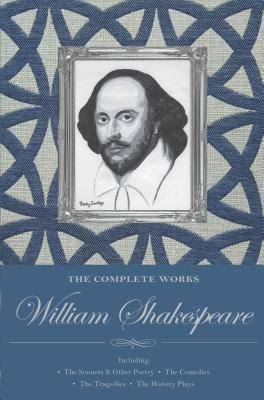
Description
All the plays and poems of William Shakespeare.
| Length | Emails required |
|---|---|
| 7,725 lines | 194 (based on one per day) |
Preview - part 114 of 194
GOBBO. Master young man, you, I pray you, which is the way to master Jew's? LAUNCELOT. [Aside] O heavens! This is my true-begotten father, who, being more than sand-blind, high-gravel blind, knows me not. I will try confusions with him. GOBBO. Master young gentleman, I pray you, which is the way to master Jew's? LAUNCELOT. Turn up on your right hand at the next turning, but, at the next turning of all, on your left; marry, at the very next turning, turn of no hand, but turn down indirectly to the Jew's house. GOBBO. Be God's sonties, 'twill be a hard way to hit! Can you tell me whether one Launcelot, that dwells with him, dwell with him or no? LAUNCELOT. Talk you of young Master Launcelot? [Aside] Mark me now; now will I raise the waters.- Talk you of young Master Launcelot? GOBBO. No master, sir, but a poor man's son; his father, though I say't, is an honest exceeding poor man, and, God be thanked, well to live. LAUNCELOT. Well, let his father be what 'a will, we talk of young Master Launcelot. GOBBO. Your worship's friend, and Launcelot, sir. LAUNCELOT. But I pray you, ergo, old man, ergo, I beseech you, talk you of young Master Launcelot? GOBBO. Of Launcelot, an't please your mastership. LAUNCELOT. Ergo, Master Launcelot. Talk not of Master Launcelot, father; for the young gentleman, according to Fates and Destinies and such odd sayings, the Sisters Three and such branches of learning, is indeed deceased; or, as you would say in plain terms, gone to heaven. GOBBO. Marry, God forbid! The boy was the very staff of my age, my very prop. LAUNCELOT. Do I look like a cudgel or a hovel-post, a staff or a prop? Do you know me, father? GOBBO. Alack the day, I know you not, young gentleman; but I pray you tell me, is my boy- God rest his soul!- alive or dead? LAUNCELOT. Do you not know me, father? GOBBO. Alack, sir, I am sand-blind; I know you not. LAUNCELOT. Nay, indeed, if you had your eyes, you might fail of the knowing me: it is a wise father that knows his own child. Well, old man, I will tell you news of your son. Give me your blessing; truth will come to light; murder cannot be hid long; a man's son may, but in the end truth will out. GOBBO. Pray you, sir, stand up; I am sure you are not Launcelot my boy. LAUNCELOT. Pray you, let's have no more fooling about it, but give me your blessing; I am Launcelot, your boy that was, your son that is, your child that shall be. GOBBO. I cannot think you are my son. LAUNCELOT. I know not what I shall think of that; but I am Launcelot, the Jew's man, and I am sure Margery your wife is my mother. GOBBO. Her name is Margery, indeed. I'll be sworn, if thou be Launcelot, thou art mine own flesh and blood. Lord worshipp'd might he be, what a beard hast thou got! Thou hast got more hair on thy chin than Dobbin my fill-horse has on his tail. LAUNCELOT. It should seem, then, that Dobbin's tail grows backward; I am sure he had more hair of his tail than I have of my face when I last saw him. GOBBO. Lord, how art thou chang'd! How dost thou and thy master agree? I have brought him a present. How 'gree you now? LAUNCELOT. Well, well; but, for mine own part, as I have set up my rest to run away, so I will not rest till I have run some ground. My master's a very Jew. Give him a present! Give him a halter. I am famish'd in his service; you may tell every finger I have with my ribs. Father, I am glad you are come; give me your present to one Master Bassanio, who indeed gives rare new liveries; if I serve not him, I will run as far as God has any ground. O rare fortune! Here comes the man. To him, father, for I am a Jew, if I serve the Jew any longer.
Enter BASSANIO, with LEONARDO, with a FOLLOWER or two
BASSANIO. You may do so; but let it be so hasted that supper be ready at the farthest by five of the clock. See these letters delivered, put the liveries to making, and desire Gratiano to come anon to my lodging. Exit a SERVANT LAUNCELOT. To him, father. GOBBO. God bless your worship! BASSANIO. Gramercy; wouldst thou aught with me? GOBBO. Here's my son, sir, a poor boy- LAUNCELOT. Not a poor boy, sir, but the rich Jew's man, that would, sir, as my father shall specify- GOBBO. He hath a great infection, sir, as one would say, to serve- LAUNCELOT. Indeed the short and the long is, I serve the Jew, and have a desire, as my father shall specify- GOBBO. His master and he, saving your worship's reverence, are scarce cater-cousins- LAUNCELOT. To be brief, the very truth is that the Jew, having done me wrong, doth cause me, as my father, being I hope an old man, shall frutify unto you- GOBBO. I have here a dish of doves that I would bestow upon your worship; and my suit is- LAUNCELOT. In very brief, the suit is impertinent to myself, as your worship shall know by this honest old man; and, though I say it, though old man, yet poor man, my father. BASSANIO. One speak for both. What would you? LAUNCELOT. Serve you, sir. GOBBO. That is the very defect of the matter, sir. BASSANIO. I know thee well; thou hast obtain'd thy suit. Shylock thy master spoke with me this day, And hath preferr'd thee, if it be preferment To leave a rich Jew's service to become The follower of so poor a gentleman. LAUNCELOT. The old proverb is very well parted between my master Shylock and you, sir: you have the grace of God, sir, and he hath enough. BASSANIO. Thou speak'st it well. Go, father, with thy son. Take leave of thy old master, and inquire My lodging out. [To a SERVANT] Give him a livery More guarded than his fellows'; see it done. LAUNCELOT. Father, in. I cannot get a service, no! I have ne'er a tongue in my head! [Looking on his palm] Well; if any man in Italy have a fairer table which doth offer to swear upon a book- I shall have good fortune. Go to, here's a simple line of life; here's a small trifle of wives; alas, fifteen wives is nothing; a'leven widows and nine maids is a simple coming-in for one man. And then to scape drowning thrice, and to be in peril of my life with the edge of a feather-bed-here are simple scapes. Well, if Fortune be a woman, she's a good wench for this gear. Father, come; I'll take my leave of the Jew in the twinkling. Exeunt LAUNCELOT and OLD GOBBO BASSANIO. I pray thee, good Leonardo, think on this. These things being bought and orderly bestowed, Return in haste, for I do feast to-night My best esteem'd acquaintance; hie thee, go. LEONARDO. My best endeavours shall be done herein.
Enter GRATIANO
GRATIANO. Where's your master? LEONARDO. Yonder, sir, he walks. Exit GRATIANO. Signior Bassanio! BASSANIO. Gratiano! GRATIANO. I have suit to you. BASSANIO. You have obtain'd it. GRATIANO. You must not deny me: I must go with you to Belmont. BASSANIO. Why, then you must. But hear thee, Gratiano: Thou art too wild, too rude, and bold of voice- Parts that become thee happily enough, And in such eyes as ours appear not faults; But where thou art not known, why there they show Something too liberal. Pray thee, take pain To allay with some cold drops of modesty Thy skipping spirit; lest through thy wild behaviour I be misconst'red in the place I go to And lose my hopes. GRATIANO. Signior Bassanio, hear me: If I do not put on a sober habit, Talk with respect, and swear but now and then, Wear prayer-books in my pocket, look demurely, Nay more, while grace is saying hood mine eyes Thus with my hat, and sigh, and say amen, Use all the observance of civility Like one well studied in a sad ostent To please his grandam, never trust me more. BASSANIO. Well, we shall see your bearing. GRATIANO. Nay, but I bar to-night; you shall not gauge me By what we do to-night. BASSANIO. No, that were pity; I would entreat you rather to put on Your boldest suit of mirth, for we have friends That purpose merriment. But fare you well; I have some business. GRATIANO. And I must to Lorenzo and the rest; But we will visit you at supper-time. Exeunt
SCENE III. Venice. SHYLOCK'S house
Enter JESSICA and LAUNCELOT
JESSICA. I am sorry thou wilt leave my father so. Our house is hell; and thou, a merry devil, Didst rob it of some taste of tediousness. But fare thee well; there is a ducat for thee; And, Launcelot, soon at supper shalt thou see Lorenzo, who is thy new master's guest. Give him this letter; do it secretly. And so farewell. I would not have my father See me in talk with thee. LAUNCELOT. Adieu! tears exhibit my tongue. Most beautiful pagan, most sweet Jew! If a Christian do not play the knave and get thee, I am much deceived. But, adieu! these foolish drops do something drown my manly spirit; adieu! JESSICA. Farewell, good Launcelot. Exit LAUNCELOT Alack, what heinous sin is it in me To be asham'd to be my father's child! But though I am a daughter to his blood, I am not to his manners. O Lorenzo, If thou keep promise, I shall end this strife, Become a Christian and thy loving wife. Exit
SCENE IV. Venice. A street
Enter GRATIANO, LORENZO, SALERIO, and SOLANIO
LORENZO. Nay, we will slink away in suppertime, Disguise us at my lodging, and return All in an hour. GRATIANO. We have not made good preparation. SALERIO. We have not spoke us yet of torch-bearers. SOLANIO. 'Tis vile, unless it may be quaintly ordered; And better in my mind not undertook. LORENZO. 'Tis now but four o'clock; we have two hours To furnish us.
Enter LAUNCELOT, With a letter
Friend Launcelot, what's the news? LAUNCELOT. An it shall please you to break up this, it shall seem to signify. LORENZO. I know the hand; in faith, 'tis a fair hand, And whiter than the paper it writ on Is the fair hand that writ. GRATIANO. Love-news, in faith! LAUNCELOT. By your leave, sir. LORENZO. Whither goest thou? LAUNCELOT. Marry, sir, to bid my old master, the Jew, to sup to-night with my new master, the Christian. LORENZO. Hold, here, take this. Tell gentle Jessica I will not fail her; speak it privately. Go, gentlemen, Exit LAUNCELOT Will you prepare you for this masque to-night? I am provided of a torch-bearer. SALERIO. Ay, marry, I'll be gone about it straight. SOLANIO. And so will I. LORENZO. Meet me and Gratiano At Gratiano's lodging some hour hence. SALERIO. 'Tis good we do so. Exeunt SALERIO and SOLANIO GRATIANO. Was not that letter from fair Jessica? LORENZO. I must needs tell thee all. She hath directed How I shall take her from her father's house; What gold and jewels she is furnish'd with; What page's suit she hath in readiness. If e'er the Jew her father come to heaven, It will be for his gentle daughter's sake; And never dare misfortune cross her foot, Unless she do it under this excuse, That she is issue to a faithless Jew. Come, go with me, peruse this as thou goest; Fair Jessica shall be my torch-bearer. Exeunt
SCENE V. Venice. Before SHYLOCK'S house
Enter SHYLOCK and LAUNCELOT
SHYLOCK. Well, thou shalt see; thy eyes shall be thy judge, The difference of old Shylock and Bassanio.- What, Jessica!- Thou shalt not gormandize As thou hast done with me- What, Jessica!- And sleep and snore, and rend apparel out- Why, Jessica, I say! LAUNCELOT. Why, Jessica! SHYLOCK. Who bids thee call? I do not bid thee call. LAUNCELOT. Your worship was wont to tell me I could do nothing without bidding.
Enter JESSICA
JESSICA. Call you? What is your will? SHYLOCK. I am bid forth to supper, Jessica; There are my keys. But wherefore should I go? I am not bid for love; they flatter me; But yet I'll go in hate, to feed upon The prodigal Christian. Jessica, my girl, Look to my house. I am right loath to go; There is some ill a-brewing towards my rest, For I did dream of money-bags to-night. LAUNCELOT. I beseech you, sir, go; my young master doth expect your reproach. SHYLOCK. So do I his. LAUNCELOT. And they have conspired together; I will not say you shall see a masque, but if you do, then it was not for nothing that my nose fell a-bleeding on Black Monday last at six o'clock i' th' morning, falling out that year on Ash Wednesday was four year, in th' afternoon. SHYLOCK. What, are there masques? Hear you me, Jessica: Lock up my doors, and when you hear the drum, And the vile squealing of the wry-neck'd fife, Clamber not you up to the casements then, Nor thrust your head into the public street To gaze on Christian fools with varnish'd faces; But stop my house's ears- I mean my casements; Let not the sound of shallow fopp'ry enter My sober house. By Jacob's staff, I swear I have no mind of feasting forth to-night; But I will go. Go you before me, sirrah; Say I will come. LAUNCELOT. I will go before, sir. Mistress, look out at window for all this. There will come a Christian by Will be worth a Jewess' eye. Exit SHYLOCK. What says that fool of Hagar's offspring, ha? JESSICA. His words were 'Farewell, mistress'; nothing else. SHYLOCK. The patch is kind enough, but a huge feeder, Snail-slow in profit, and he sleeps by day More than the wild-cat; drones hive not with me, Therefore I part with him; and part with him To one that I would have him help to waste His borrowed purse. Well, Jessica, go in; Perhaps I will return immediately. Do as I bid you, shut doors after you. Fast bind, fast find- A proverb never stale in thrifty mind. Exit JESSICA. Farewell; and if my fortune be not crost, I have a father, you a daughter, lost. Exit
SCENE VI. Venice. Before SHYLOCK'S house
Enter the maskers, GRATIANO and SALERIO
GRATIANO. This is the pent-house under which Lorenzo Desired us to make stand. SALERIO. His hour is almost past. GRATIANO. And it is marvel he out-dwells his hour, For lovers ever run before the clock. SALERIO. O, ten times faster Venus' pigeons fly To seal love's bonds new made than they are wont To keep obliged faith unforfeited! GRATIANO. That ever holds: who riseth from a feast With that keen appetite that he sits down? Where is the horse that doth untread again His tedious measures with the unbated fire That he did pace them first? All things that are Are with more spirit chased than enjoyed. How like a younker or a prodigal The scarfed bark puts from her native bay, Hugg'd and embraced by the strumpet wind; How like the prodigal doth she return, With over-weather'd ribs and ragged sails, Lean, rent, and beggar'd by the strumpet wind!
Enter LORENZO
SALERIO. Here comes Lorenzo; more of this hereafter. LORENZO. Sweet friends, your patience for my long abode! Not I, but my affairs, have made you wait. When you shall please to play the thieves for wives, I'll watch as long for you then. Approach; Here dwells my father Jew. Ho! who's within?
Enter JESSICA, above, in boy's clothes
JESSICA. Who are you? Tell me, for more certainty, Albeit I'll swear that I do know your tongue. LORENZO. Lorenzo, and thy love. JESSICA. Lorenzo, certain; and my love indeed; For who love I so much? And now who knows But you, Lorenzo, whether I am yours? LORENZO. Heaven and thy thoughts are witness that thou art. JESSICA. Here, catch this casket; it is worth the pains. I am glad 'tis night, you do not look on me, For I am much asham'd of my exchange; But love is blind, and lovers cannot see The pretty follies that themselves commit, For, if they could, Cupid himself would blush To see me thus transformed to a boy. LORENZO. Descend, for you must be my torch-bearer. JESSICA. What! must I hold a candle to my shames? They in themselves, good sooth, are too too light. Why, 'tis an office of discovery, love, And I should be obscur'd. LORENZO. So are you, sweet, Even in the lovely garnish of a boy. But come at once, For the close night doth play the runaway, And we are stay'd for at Bassanio's feast. JESSICA. I will make fast the doors, and gild myself With some moe ducats, and be with you straight. Exit above
GRATIANO. Now, by my hood, a gentle, and no Jew. LORENZO. Beshrew me, but I love her heartily, For she is wise, if I can judge of her, And fair she is, if that mine eyes be true, And true she is, as she hath prov'd herself; And therefore, like herself, wise, fair, and true, Shall she be placed in my constant soul.
Enter JESSICA, below
What, art thou come? On, gentlemen, away; Our masquing mates by this time for us stay. Exit with JESSICA and SALERIO
Enter ANTONIO
ANTONIO. Who's there? GRATIANO. Signior Antonio? ANTONIO. Fie, fie, Gratiano, where are all the rest? 'Tis nine o'clock; our friends all stay for you; No masque to-night; the wind is come about; Bassanio presently will go aboard; I have sent twenty out to seek for you. GRATIANO. I am glad on't; I desire no more delight Than to be under sail and gone to-night. Exeunt
SCENE VII. Belmont. PORTIA's house
Flourish of cornets. Enter PORTIA, with the PRINCE OF MOROCCO, and their trains
PORTIA. Go draw aside the curtains and discover The several caskets to this noble Prince. Now make your choice. PRINCE OF MOROCCO. The first, of gold, who this inscription bears: 'Who chooseth me shall gain what many men desire.' The second, silver, which this promise carries: 'Who chooseth me shall get as much as he deserves.' This third, dull lead, with warning all as blunt: 'Who chooseth me must give and hazard all he hath.' How shall I know if I do choose the right? PORTIA. The one of them contains my picture, Prince; If you choose that, then I am yours withal. PRINCE OF MOROCCO. Some god direct my judgment! Let me see; I will survey th' inscriptions back again. What says this leaden casket? 'Who chooseth me must give and hazard all he hath.' Must give- for what? For lead? Hazard for lead! This casket threatens; men that hazard all Do it in hope of fair advantages. A golden mind stoops not to shows of dross; I'll then nor give nor hazard aught for lead. What says the silver with her virgin hue? 'Who chooseth me shall get as much as he deserves.' As much as he deserves! Pause there, Morocco, And weigh thy value with an even hand. If thou beest rated by thy estimation, Thou dost deserve enough, and yet enough May not extend so far as to the lady; And yet to be afeard of my deserving Were but a weak disabling of myself. As much as I deserve? Why, that's the lady! I do in birth deserve her, and in fortunes, In graces, and in qualities of breeding; But more than these, in love I do deserve. What if I stray'd no farther, but chose here? Let's see once more this saying grav'd in gold: 'Who chooseth me shall gain what many men desire.' Why, that's the lady! All the world desires her; From the four corners of the earth they come To kiss this shrine, this mortal-breathing saint. The Hyrcanian deserts and the vasty wilds Of wide Arabia are as throughfares now For princes to come view fair Portia. The watery kingdom, whose ambitious head Spits in the face of heaven, is no bar To stop the foreign spirits, but they come As o'er a brook to see fair Portia. One of these three contains her heavenly picture. Is't like that lead contains her? 'Twere damnation To think so base a thought; it were too gross To rib her cerecloth in the obscure grave. Or shall I think in silver she's immur'd, Being ten times undervalued to tried gold? O sinful thought! Never so rich a gem Was set in worse than gold. They have in England A coin that bears the figure of an angel Stamp'd in gold; but that's insculp'd upon. But here an angel in a golden bed Lies all within. Deliver me the key; Here do I choose, and thrive I as I may! PORTIA. There, take it, Prince, and if my form lie there, Then I am yours. [He opens the golden casket] PRINCE OF MOROCCO. O hell! what have we here? A carrion Death, within whose empty eye There is a written scroll! I'll read the writing. 'All that glisters is not gold, Often have you heard that told; Many a man his life hath sold But my outside to behold. Gilded tombs do worms infold. Had you been as wise as bold, Young in limbs, in judgment old, Your answer had not been inscroll'd. Fare you well, your suit is cold.' Cold indeed, and labour lost, Then farewell, heat, and welcome, frost. Portia, adieu! I have too griev'd a heart To take a tedious leave; thus losers part. Exit with his train. Flourish of cornets PORTIA. A gentle riddance. Draw the curtains, go. Let all of his complexion choose me so. Exeunt
SCENE VIII. Venice. A street