The Complete Works
William Shakespeare
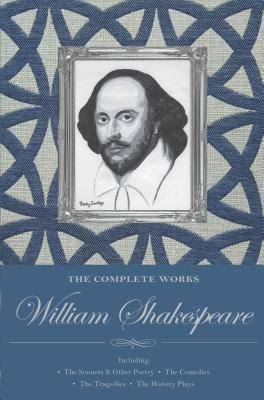
Description
All the plays and poems of William Shakespeare.
| Length | Emails required |
|---|---|
| 7,725 lines | 194 (based on one per day) |
Preview - part 106 of 194
SCENE V. A heath. Thunder.
Enter the three Witches, meeting Hecate.
FIRST WITCH. Why, how now, Hecate? You look angerly. HECATE. Have I not reason, beldams as you are, Saucy and overbold? How did you dare To trade and traffic with Macbeth In riddles and affairs of death, And I, the mistress of your charms, The close contriver of all harms, Was never call'd to bear my part, Or show the glory of our art? And, which is worse, all you have done Hath been but for a wayward son, Spiteful and wrathful, who, as others do, Loves for his own ends, not for you. But make amends now. Get you gone, And at the pit of Acheron Meet me i' the morning. Thither he Will come to know his destiny. Your vessels and your spells provide, Your charms and everything beside. I am for the air; this night I'll spend Unto a dismal and a fatal end. Great business must be wrought ere noon: Upon the corner of the moon There hangs a vaporous drop profound; I'll catch it ere it come to ground. And that distill'd by magic sleights Shall raise such artificial sprites As by the strength of their illusion Shall draw him on to his confusion. He shall spurn fate, scorn death, and bear His hopes 'bove wisdom, grace, and fear. And you all know security Is mortals' chiefest enemy. Music and a song within, "Come away, come away." Hark! I am call'd; my little spirit, see, Sits in a foggy cloud and stays for me. Exit. FIRST WITCH. Come, let's make haste; she'll soon be back again. Exeunt.
SCENE VI. Forres. The palace.
Enter Lennox and another Lord.
LENNOX. My former speeches have but hit your thoughts, Which can interpret farther; only I say Thing's have been strangely borne. The gracious Duncan Was pitied of Macbeth; marry, he was dead. And the right valiant Banquo walk'd too late, Whom, you may say, if't please you, Fleance kill'd, For Fleance fled. Men must not walk too late. Who cannot want the thought, how monstrous It was for Malcolm and for Donalbain To kill their gracious father? Damned fact! How it did grieve Macbeth! Did he not straight, In pious rage, the two delinquents tear That were the slaves of drink and thralls of sleep? Was not that nobly done? Ay, and wisely too, For 'twould have anger'd any heart alive To hear the men deny't. So that, I say, He has borne all things well; and I do think That, had he Duncan's sons under his key- As, an't please heaven, he shall not -they should find What 'twere to kill a father; so should Fleance. But, peace! For from broad words, and 'cause he fail'd His presence at the tyrant's feast, I hear, Macduff lives in disgrace. Sir, can you tell Where he bestows himself? LORD. The son of Duncan, From whom this tyrant holds the due of birth, Lives in the English court and is received Of the most pious Edward with such grace That the malevolence of fortune nothing Takes from his high respect. Thither Macduff Is gone to pray the holy King, upon his aid To wake Northumberland and warlike Siward; That by the help of these, with Him above To ratify the work, we may again Give to our tables meat, sleep to our nights, Free from our feasts and banquets bloody knives, Do faithful homage, and receive free honors- All which we pine for now. And this report Hath so exasperate the King that he Prepares for some attempt of war. LENNOX. Sent he to Macduff? LORD. He did, and with an absolute "Sir, not I," The cloudy messenger turns me his back, And hums, as who should say, "You'll rue the time That clogs me with this answer." LENNOX. And that well might Advise him to a caution, to hold what distance His wisdom can provide. Some holy angel Fly to the court of England and unfold His message ere he come, that a swift blessing May soon return to this our suffering country Under a hand accursed! LORD. I'll send my prayers with him. Exeunt.
<>
ACT IV. SCENE I. A cavern. In the middle, a boiling cauldron. Thunder.
Enter the three Witches. FIRST WITCH. Thrice the brinded cat hath mew'd. SECOND WITCH. Thrice and once the hedge-pig whined. THIRD WITCH. Harpier cries, "'Tis time, 'tis time." FIRST WITCH. Round about the cauldron go; In the poison'd entrails throw. Toad, that under cold stone Days and nights has thirty-one Swelter'd venom sleeping got, Boil thou first i' the charmed pot. ALL. Double, double, toil and trouble; Fire burn and cauldron bubble. SECOND WITCH. Fillet of a fenny snake, In the cauldron boil and bake; Eye of newt and toe of frog, Wool of bat and tongue of dog, Adder's fork and blind-worm's sting, Lizard's leg and howlet's wing, For a charm of powerful trouble, Like a hell-broth boil and bubble. ALL. Double, double, toil and trouble; Fire burn and cauldron bubble. THIRD WITCH. Scale of dragon, tooth of wolf, Witch's mummy, maw and gulf Of the ravin'd salt-sea shark, Root of hemlock digg'd i' the dark, Liver of blaspheming Jew, Gall of goat and slips of yew Sliver'd in the moon's eclipse, Nose of Turk and Tartar's lips, Finger of birth-strangled babe Ditch-deliver'd by a drab, Make the gruel thick and slab. Add thereto a tiger's chawdron, For the ingredients of our cawdron. ALL. Double, double, toil and trouble; Fire burn and cauldron bubble. SECOND WITCH. Cool it with a baboon's blood, Then the charm is firm and good.
Enter Hecate to the other three Witches.
HECATE. O, well done! I commend your pains, And everyone shall share i' the gains. And now about the cauldron sing, Like elves and fairies in a ring, Enchanting all that you put in. Music and a song, "Black spirits." Hecate retires. SECOND WITCH. By the pricking of my thumbs, Something wicked this way comes. Open, locks, Whoever knocks!
Enter Macbeth.
MACBETH. How now, you secret, black, and midnight hags? What is't you do? ALL. A deed without a name. MACBETH. I conjure you, by that which you profess (Howeer you come to know it) answer me: Though you untie the winds and let them fight Against the churches, though the yesty waves Confound and swallow navigation up, Though bladed corn be lodged and trees blown down, Though castles topple on their warders' heads, Though palaces and pyramids do slope Their heads to their foundations, though the treasure Of nature's germaines tumble all together Even till destruction sicken, answer me To what I ask you. FIRST WITCH. Speak. SECOND WITCH. Demand. THIRD WITCH. We'll answer. FIRST WITCH. Say, if thou'dst rather hear it from our mouths, Or from our masters'? MACBETH. Call 'em, let me see 'em. FIRST WITCH. Pour in sow's blood that hath eaten Her nine farrow; grease that's sweaten From the murtherer's gibbet throw Into the flame. ALL. Come, high or low; Thyself and office deftly show!
Thunder. First Apparition: an armed Head.
MACBETH. Tell me, thou unknown power- FIRST WITCH. He knows thy thought: Hear his speech, but say thou nought. FIRST APPARITION. Macbeth! Macbeth! Macbeth! Beware Macduff, Beware the Thane of Fife. Dismiss me. Enough. Descends. MACBETH. Whate'er thou art, for thy good caution, thanks; Thou hast harp'd my fear aright. But one word more- FIRST WITCH. He will not be commanded. Here's another, More potent than the first.
Thunder. Second Apparition: a bloody Child.
SECOND APPARITION. Macbeth! Macbeth! Macbeth! MACBETH. Had I three ears, I'd hear thee. SECOND APPARITION. Be bloody, bold, and resolute: laugh to scorn The power of man, for none of woman born Shall harm Macbeth. Descends. MACBETH. Then live, Macduff. What need I fear of thee? But yet I'll make assurance double sure, And take a bond of fate: thou shalt not live, That I may tell pale-hearted fear it lies, And sleep in spite of thunder.
Thunder. Third Apparition: a Child crowned, with a tree in his hand.
What is this, That rises like the issue of a king, And wears upon his baby brow the round And top of sovereignty? ALL. Listen, but speak not to't. THIRD APPARITION. Be lion-mettled, proud, and take no care Who chafes, who frets, or where conspirers are. Macbeth shall never vanquish'd be until Great Birnam Wood to high Dunsinane Hill Shall come against him. Descends. MACBETH. That will never be. Who can impress the forest, bid the tree Unfix his earth-bound root? Sweet bodements, good! Rebellion's head, rise never till the Wood Of Birnam rise, and our high-placed Macbeth Shall live the lease of nature, pay his breath To time and mortal custom. Yet my heart Throbs to know one thing: tell me, if your art Can tell so much, shall Banquo's issue ever Reign in this kingdom? ALL. Seek to know no more. MACBETH. I will be satisfied! Deny me this, And an eternal curse fall on you! Let me know. Why sinks that cauldron, and what noise is this? Hautboys. FIRST WITCH. Show! SECOND WITCH. Show! THIRD. WITCH. Show! ALL. Show his eyes, and grieve his heart; Come like shadows, so depart!
A show of eight Kings, the last with a glass in his hand; Banquo's Ghost following.
MACBETH. Thou are too like the spirit of Banquo Down! Thy crown does sear mine eyeballs. And thy hair, Thou other gold-bound brow, is like the first. A third is like the former. Filthy hags! Why do you show me this? A fourth! Start, eyes! What, will the line stretch out to the crack of doom? Another yet! A seventh! I'll see no more! And yet the eighth appears, who bears a glass Which shows me many more; and some I see That twofold balls and treble sceptres carry. Horrible sight! Now I see 'tis true; For the blood-bolter'd Banquo smiles upon me, And points at them for his. What, is this so? FIRST WITCH. Ay, sir, all this is so. But why Stands Macbeth thus amazedly? Come,sisters, cheer we up his sprites, And show the best of our delights. I'll charm the air to give a sound, While you perform your antic round, That this great King may kindly say Our duties did his welcome pay. Music. The Witches dance and then vanish with Hecate. MACBETH. are they? Gone? Let this pernicious hour Stand ay accursed in the calendar! Come in, without there!
Enter Lennox.
LENNOX. What's your Grace's will? MACBETH. Saw you the weird sisters? LENNOX. No, my lord. MACBETH. Came they not by you? LENNOX. No indeed, my lord. MACBETH. Infected be the 'air whereon they ride, And damn'd all those that trust them! I did hear The galloping of horse. Who wast came by? LENNOX. 'Tis two or three, my lord, that bring you word Macduff is fled to England. MACBETH. Fled to England? LENNOX. Ay, my good lord. MACBETH. [Aside.] Time, thou anticipatest my dread exploits. The flighty purpose never is o'ertook Unless the deed go with it. From this moment The very firstlings of my heart shall be The firstlings of my hand. And even now, To crown my thoughts with acts, be it thought and done: The castle of Macduff I will surprise, Seize upon Fife, give to the edge o' the sword His wife, his babes, and all unfortunate souls That trace him in his line. No boasting like a fool; This deed I'll do before this purpose cool. But no more sights! -Where are these gentlemen? Come, bring me where they are. Exeunt.
SCENE II. Fife. Macduff's castle.
Enter Lady Macduff, her Son, and Ross.
LADY MACDUFF. What had he done, to make him fly the land? ROSS. You must have patience, madam. LADY MACDUFF. He had none; His flight was madness. When our actions do not, Our fears do make us traitors. ROSS. You know not Whether it was his wisdom or his fear. LADY MACDUFF. Wisdom? To leave his wife, to leave his babes, His mansion, and his titles, in a place From whence himself does fly? He loves us not; He wants the natural touch; for the poor wren, The most diminutive of birds, will fight, Her young ones in her nest, against the owl. All is the fear and nothing is the love; As little is the wisdom, where the flight So runs against all reason. ROSS. My dearest coz, I pray you, school yourself. But for your husband, He is noble, wise, Judicious, and best knows The fits o' the season. I dare not speak much further; But cruel are the times when we are traitors And do not know ourselves; when we hold rumor From what we fear, yet know not what we fear, But float upon a wild and violent sea Each way and move. I take my leave of you; Shall not be long but I'll be here again. Things at the worst will cease or else climb upward To what they were before. My pretty cousin, Blessing upon you! LADY MACDUFF. Father'd he is, and yet he's fatherless. ROSS. I am so much a fool, should I stay longer, It would be my disgrace and your discomfort. I take my leave at once. Exit. LADY MACDUFF. Sirrah, your father's dead. And what will you do now? How will you live? SON. As birds do, Mother. LADY MACDUFF. What, with worms and flies? SON. With what I get, I mean; and so do they. LADY MACDUFF. Poor bird! Thou'ldst never fear the net nor lime, The pitfall nor the gin. SON. Why should I, Mother? Poor birds they are not set for. My father is not dead, for all your saying. LADY MACDUFF. Yes, he is dead. How wilt thou do for father? SON. Nay, how will you do for a husband? LADY MACDUFF. Why, I can buy me twenty at any market. SON. Then you'll buy 'em to sell again. LADY MACDUFF. Thou speak'st with all thy wit, and yet, i' faith, With wit enough for thee. SON. Was my father a traitor, Mother? LADY MACDUFF. Ay, that he was. SON. What is a traitor? LADY MACDUFF. Why one that swears and lies. SON. And be all traitors that do so? LADY MACDUFF. Everyone that does so is a traitor and must be hanged. SON. And must they all be hanged that swear and lie? LADY MACDUFF. Everyone. SON. Who must hang them? LADY MACDUFF. Why, the honest men. SON. Then the liars and swearers are fools, for there are liars and swearers enow to beat the honest men and hang up them. LADY MACDUFF. Now, God help thee, poor monkey! But how wilt thou do for a father? SON. If he were dead, you'ld weep for him; if you would not, it were a good sign that I should quickly have a new father. LADY MACDUFF. Poor prattler, how thou talk'st!
Enter a Messenger.
MESSENGER. Bless you, fair dame! I am not to you known, Though in your state of honor I am perfect. I doubt some danger does approach you nearly. If you will take a homely man's advice, Be not found here; hence, with your little ones. To fright you thus, methinks I am too savage; To do worse to you were fell cruelty, Which is too nigh your person. Heaven preserve you! I dare abide no longer. Exit. LADY MACDUFF. Whither should I fly? I have done no harm. But I remember now I am in this earthly world, where to do harm Is often laudable, to do good sometime Accounted dangerous folly. Why then, alas, Do I put up that womanly defense, To say I have done no harm -What are these faces?
Enter Murtherers.
FIRST MURTHERER. Where is your husband? LADY MACDUFF. I hope, in no place so unsanctified Where such as thou mayst find him. FIRST MURTHERER. He's a traitor. SON. Thou liest, thou shag-ear'd villain! FIRST MURTHERER. What, you egg! Stabs him. Young fry of treachery! SON. He has kill'd me, Mother. Run away, I pray you! Dies. Exit Lady Macduff, crying "Murther!" Exeunt Murtherers, following her.
SCENE III. England. Before the King's palace.
Enter Malcolm and Macduff.
MALCOLM. Let us seek out some desolate shade and there Weep our sad bosoms empty. MACDUFF. Let us rather Hold fast the mortal sword, and like good men Bestride our downfall'n birthdom. Each new morn New widows howl, new orphans cry, new sorrows Strike heaven on the face, that it resounds As if it felt with Scotland and yell'd out Like syllable of dolor. MALCOLM. What I believe, I'll wall; What know, believe; and what I can redress, As I shall find the time to friend, I will. What you have spoke, it may be so perchance. This tyrant, whose sole name blisters our tongues, Was once thought honest. You have loved him well; He hath not touch'd you yet. I am young, but something You may deserve of him through me, and wisdom To offer up a weak, poor, innocent lamb To appease an angry god. MACDUFF. I am not treacherous. MALCOLM. But Macbeth is. A good and virtuous nature may recoil In an imperial charge. But I shall crave your pardon; That which you are, my thoughts cannot transpose. Angels are bright still, though the brightest fell. Though all things foul would wear the brows of grace, Yet grace must still look so. MACDUFF. I have lost my hopes. MALCOLM. Perchance even there where I did find my doubts. Why in that rawness left you wife and child, Those precious motives, those strong knots of love, Without leave-taking? I pray you, Let not my jealousies be your dishonors, But mine own safeties. You may be rightly just, Whatever I shall think. MACDUFF. Bleed, bleed, poor country! Great tyranny, lay thou thy basis sure, For goodness dare not check thee. Wear thou thy wrongs; The title is affeer'd. Fare thee well, lord. I would not be the villain that thou think'st For the whole space that's in the tyrant's grasp And the rich East to boot. MALCOLM. Be not offended; I speak not as in absolute fear of you. I think our country sinks beneath the yoke; It weeps, it bleeds, and each new day a gash Is added to her wounds. I think withal There would be hands uplifted in my right; And here from gracious England have I offer Of goodly thousands. But for all this, When I shall tread upon the tyrant's head, Or wear it on my sword, yet my poor country Shall have more vices than it had before, More suffer and more sundry ways than ever, By him that shall succeed. MACDUFF. What should he be? MALCOLM. It is myself I mean, in whom I know All the particulars of vice so grafted That, when they shall be open'd, black Macbeth Will seem as pure as snow, and the poor state Esteem him as a lamb, being compared With my confineless harms. MACDUFF. Not in the legions Of horrid hell can come a devil more damn'd In evils to top Macbeth. MALCOLM. I grant him bloody, Luxurious, avaricious, false, deceitful, Sudden, malicious, smacking of every sin That has a name. But there's no bottom, none, In my voluptuousness. Your wives, your daughters, Your matrons, and your maids could not fill up The cestern of my lust, and my desire All continent impediments would o'erbear That did oppose my will. Better Macbeth Than such an one to reign. MACDUFF. Boundless intemperance In nature is a tyranny; it hath been The untimely emptying of the happy throne, And fall of many kings. But fear not yet To take upon you what is yours. You may Convey your pleasures in a spacious plenty And yet seem cold, the time you may so hoodwink. We have willing dames enough; there cannot be That vulture in you to devour so many As will to greatness dedicate themselves, Finding it so inclined. MALCOLM. With this there grows In my most ill-composed affection such A stanchless avarice that, were I King, I should cut off the nobles for their lands, Desire his jewels and this other's house, And my more-having would be as a sauce To make me hunger more, that I should forge Quarrels unjust against the good and loyal, Destroying them for wealth. MACDUFF. This avarice Sticks deeper, grows with more pernicious root Than summer-seeming lust, and it hath been The sword of our slain kings. Yet do not fear; Scotland hath foisons to fill up your will Of your mere own. All these are portable, With other graces weigh'd. MALCOLM. But I have none. The king-becoming graces, As justice, verity, temperance, stableness, Bounty, perseverance, mercy, lowliness, Devotion, patience, courage, fortitude, I have no relish of them, but abound In the division of each several crime, Acting it many ways. Nay, had I power, I should Pour the sweet milk of concord into hell, Uproar the universal peace, confound All unity on earth. MACDUFF. O Scotland, Scotland! MALCOLM. If such a one be fit to govern, speak. I am as I have spoken. MACDUFF. Fit to govern? No, not to live. O nation miserable! With an untitled tyrant bloody-scepter'd, When shalt thou see thy wholesome days again, Since that the truest issue of thy throne By his own interdiction stands accursed And does blaspheme his breed? Thy royal father Was a most sainted king; the queen that bore thee, Oftener upon her knees than on her feet, Died every day she lived. Fare thee well! These evils thou repeat'st upon thyself Have banish'd me from Scotland. O my breast, Thy hope ends here! MALCOLM. Macduff, this noble passion, Child of integrity, hath from my soul Wiped the black scruples, reconciled my thoughts To thy good truth and honor. Devilish Macbeth By many of these trains hath sought to win me Into his power, and modest wisdom plucks me From over-credulous haste. But God above Deal between thee and me! For even now I put myself to thy direction and Unspeak mine own detraction; here abjure The taints and blames I laid upon myself, For strangers to my nature. I am yet Unknown to woman, never was forsworn, Scarcely have coveted what was mine own, At no time broke my faith, would not betray The devil to his fellow, and delight No less in truth than life. My first false speaking Was this upon myself. What I am truly Is thine and my poor country's to command. Whither indeed, before thy here-approach, Old Siward, with ten thousand warlike men Already at a point, was setting forth. Now we'll together, and the chance of goodness Be like our warranted quarrel! Why are you silent? MACDUFF. Such welcome and unwelcome things at once 'Tis hard to reconcile.
Enter a Doctor.